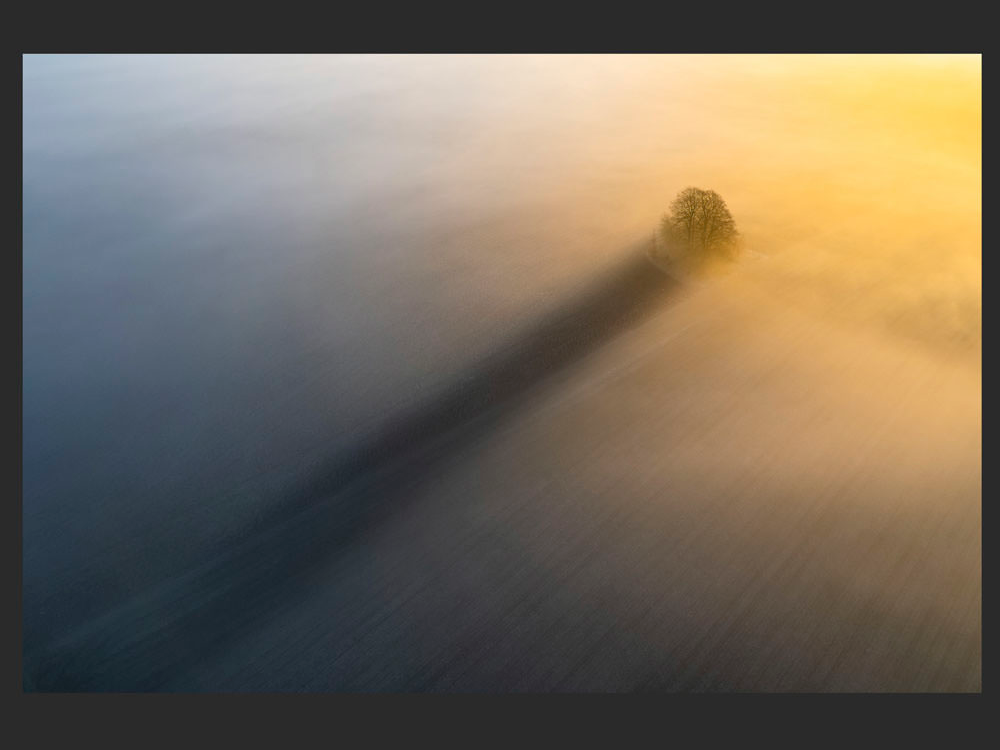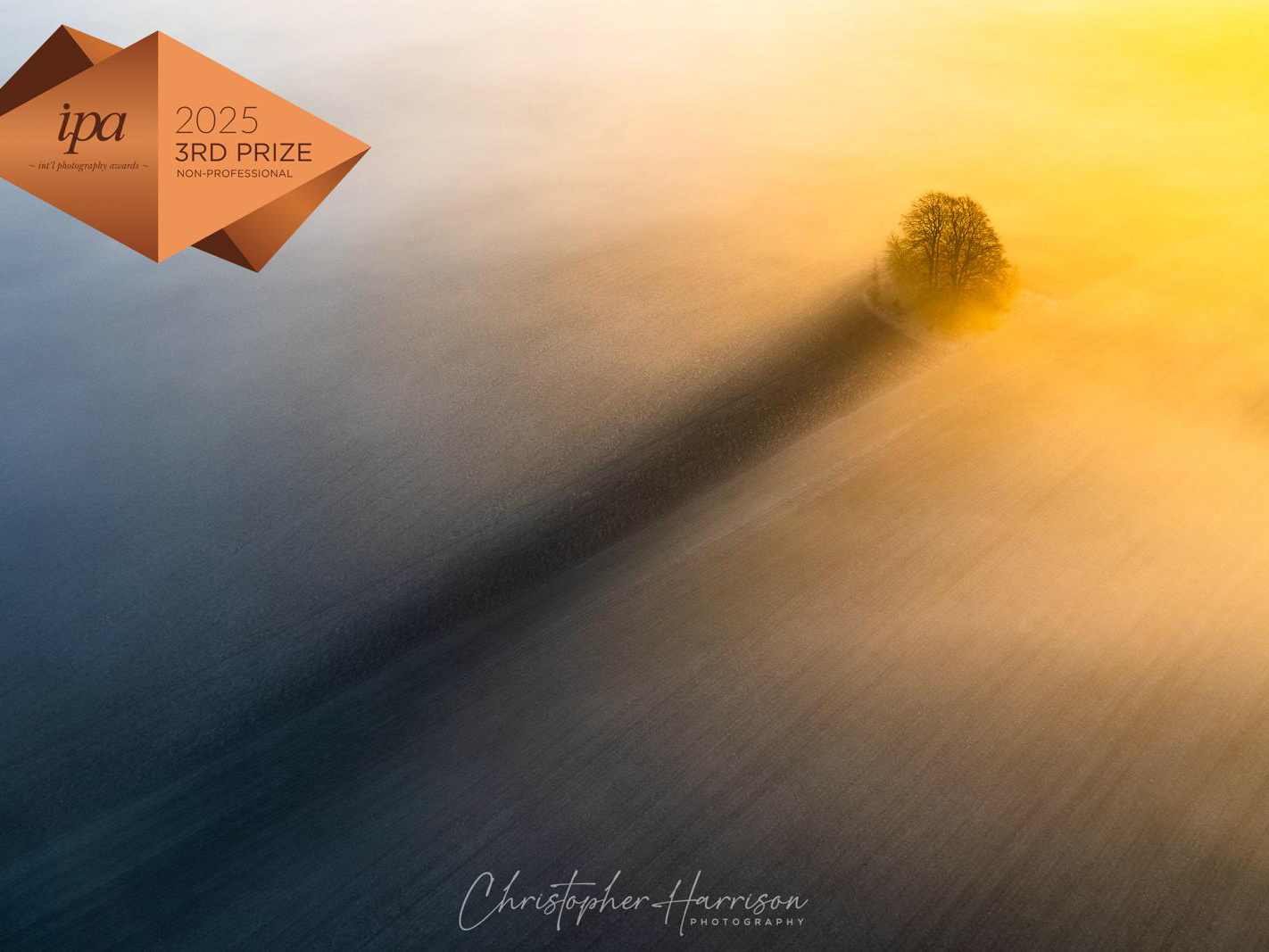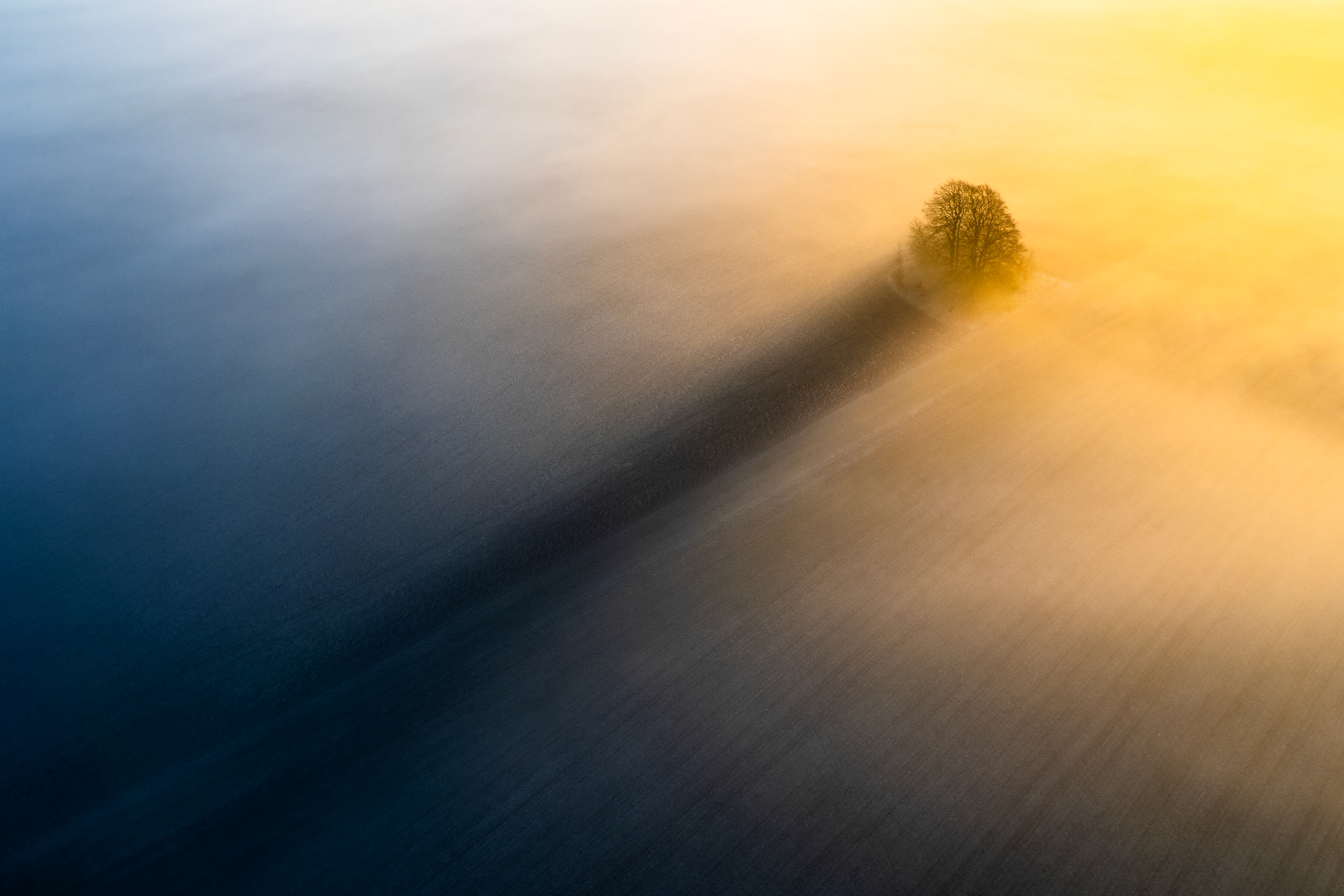
The Long Shadow captured by Christopher Harrison. This drone photograph shows a small group of trees in spring casting a long shadow into the mist during a beautiful sunrise.

The Long Shadow - an image captured on the DJI Air 2s. A worthy drone for photography! But - I wanted to step up to something better.
As photographers, we often ask ourselves if gear upgrades are genuinely necessary or if it's just "Gear Acquisition Syndrome" kicking in. For a long time, the DJI Air 2S was my trusty companion. I've flown it on over 100 flights in conditions ranging from 45c degree heat to -15c degrees, and it's never let me down. 
It is a compact, reliable drone, and produced great images. It's a solid beginner-to-intermediate drone that got the job done. In fact, it has captured photographs which have gone on to win prestigious awards - notably "The Long Shadow". This photograph has done incredibly well for me this past year - winning the Nature category of the Drone Photo Awards & the Drone category of the British Photography Awards. Again - it comes down to the actual photograph - not the equipment used to capture it. 
But recently, I decided to pull the trigger on the DJI Mavic 3 Pro. After putting it through its paces, I can confidently say this wasn’t just an incremental update; it felt like jumping from a consumer gadget to a serious, prosumer tool. If you are on the fence about upgrading, here is my experience making the switch.
The Tri-Camera System: A Composition Game Changer
The headline feature of the Mavic 3 Pro is, without a doubt, the triple-lens setup. Coming from the fixed focal length of the Air 2S, this opens up a whole new world of composition.
Being able to zoom optically into scenes creates a compression that simply wasn't possible before. It allows me to isolate subjects and find unique perspectives without having to fly close to the subject. It feels less like a drone and more like having a full camera bag in the sky.
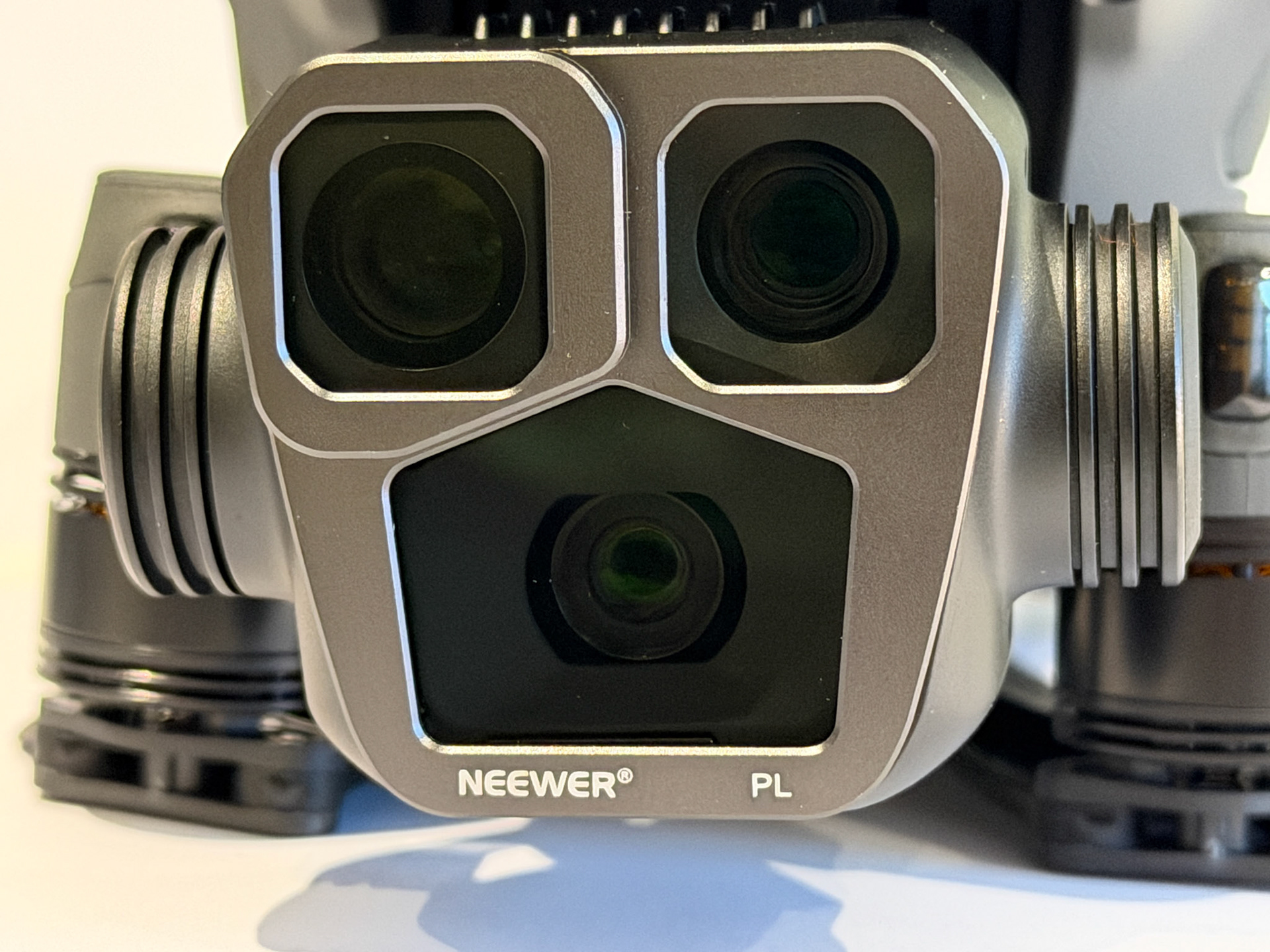
The triple cameras on the DJI Mavic 3 Pro, here shown with the NEEWER Polariser.

The triple camera system on the Mavic 3 Pro. It's a big unit, here shown with the excellent NEEWER Polariser.
The Cameras: They Feel More Like a "Real" Camera
Whilst the main 24mm Hasselblad camera is the workhorse, the 70mm equivalent zoom lens is very good quality - producing excellent RAW files. The 166mm equivalent lens is definitely "good enough" but definitely is notably lower in quality than the other two. The overall difference in dynamic range and color science from the sensors compared to the Air 2S is immediately noticeable. But the feature I most appreciate? Variable aperture. Being able to control the aperture gives a feeling much closer to a "proper camera". The image quality coming out of this sensor feels robust and malleable in post-production. It essentially bridges the gap between a "small drone camera" and a proper mirrorless camera.​​​​​​​

One notable point comparing the DJI Mavic 4 Pro & the DJI Mavic 3 Pro is that the wide lens is 28mm on the 4 and 24mm on the 3. This is significant. That 4mm on the wide end is 1/7 wider in terms of field of view. This is very significant! You can always crop if an image is too wide, but not the opposite. Whilst this isn't why I chose the 3 Pro, it is definitely something to keep in mind.
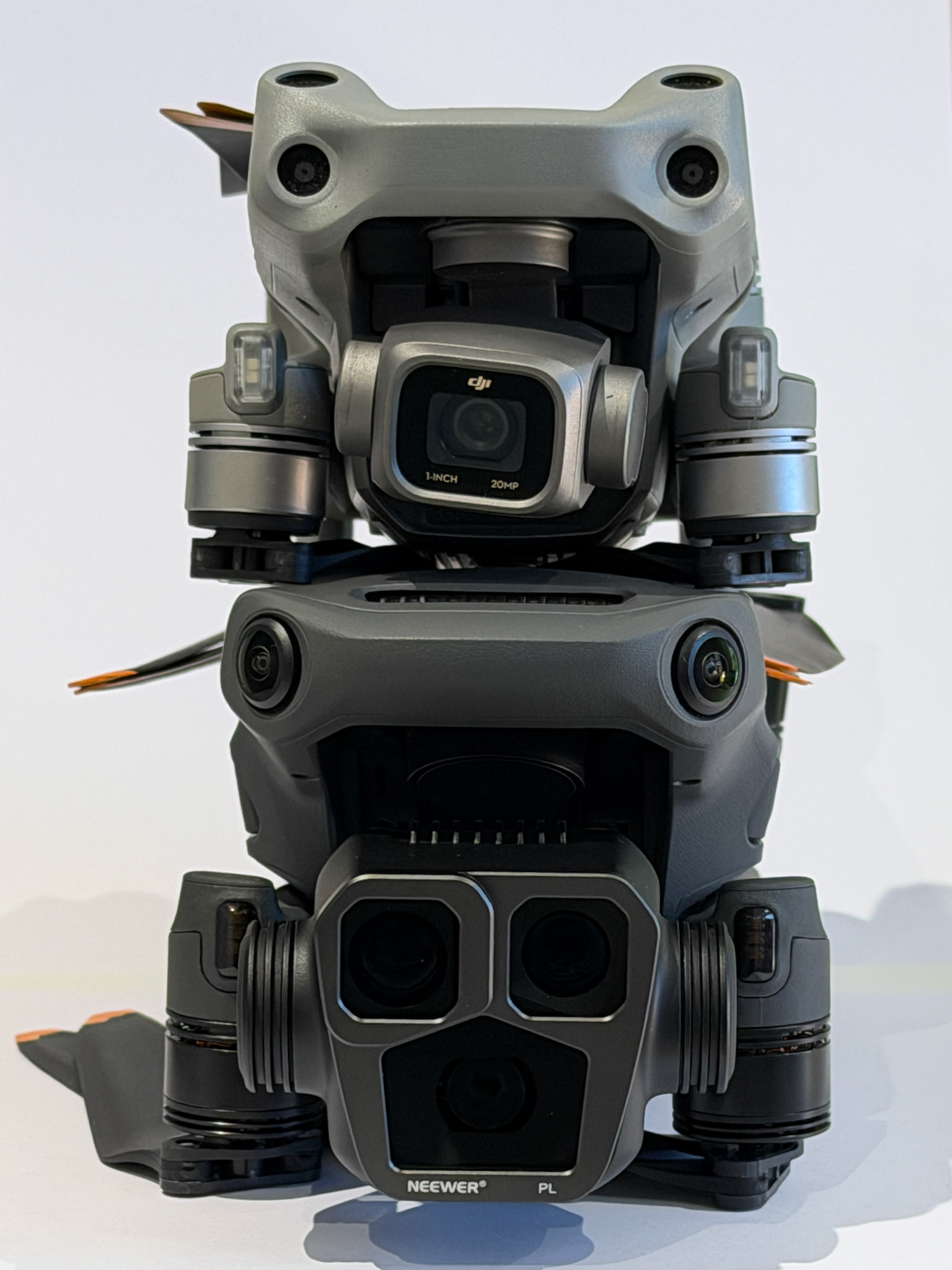
The DJI Air 2S on top of the Mavic 3 Pro drones, together. You can see the difference in size here, with the size of the camera units being a noticable improvement on the DJI Mavic 3 Pro.
The DJI Air 2S on top of the Mavic 3 Pro drones, together. You can see the difference in size here, with the size of the camera units being a noticable improvement on the DJI Mavic 3 Pro.

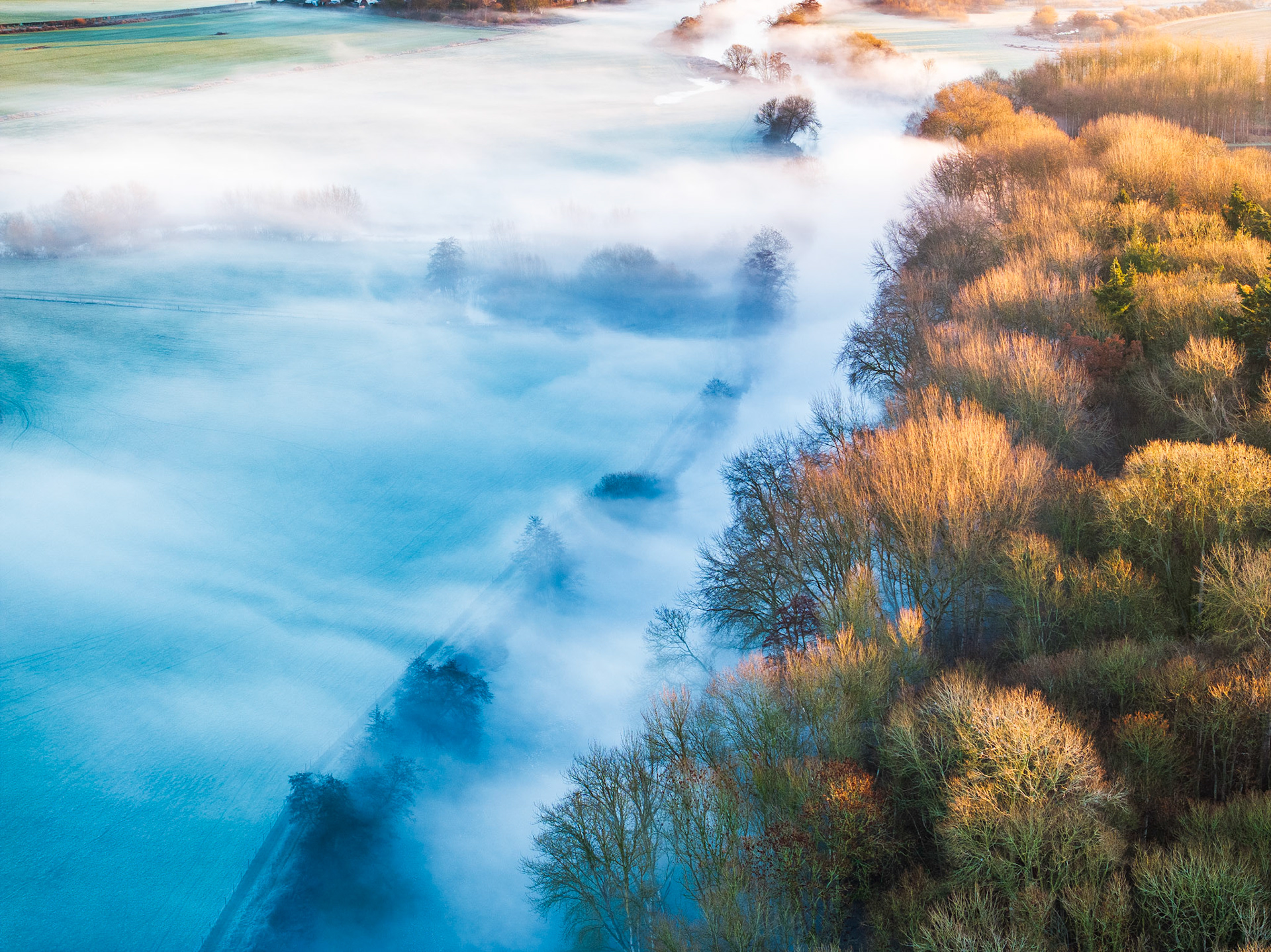
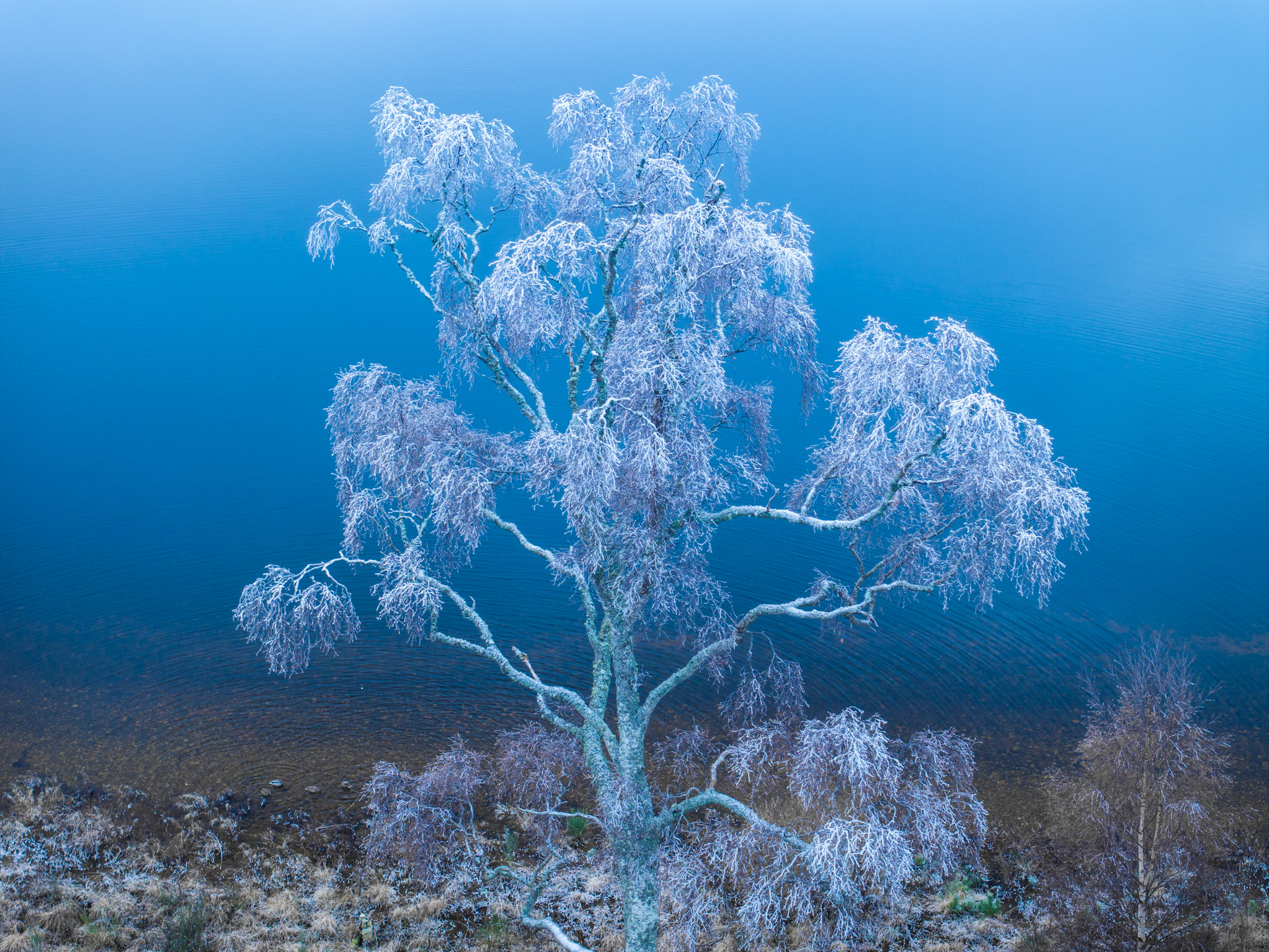
An image captured on a frosty misty morning in Oxfordshire - where warm sunrise light hits trees and the mist sits below on the River Thames and neighbouring fields. A real demonstration of the DJI Mavic 3 Pro dynamic range and colours.

Captured with the DJI Mavic 3 Pro main 24mm camera. This photograph truly demonstrates the colours, dynamic range and quality of the main camera. 
1. The Main Hasselblad Camera (24mm)
This is the primary "pro" camera, featuring the largest sensor and adjustable aperture.
- Sensor: 4/3 CMOS
- Resolution: 20 MP
- Focal Length: 24mm (equivalent)
- Aperture: f/2.8 – f/11 (Variable)
2. The Medium Tele Camera (70mm)
This is the new addition that bridges the gap, offering great compression without sacrificing too much quality.
- Sensor: 1/1.3-inch CMOS
- Resolution: 48 MP
- Focal Length: 70mm (equivalent)
- Aperture: f/2.8 (Fixed)
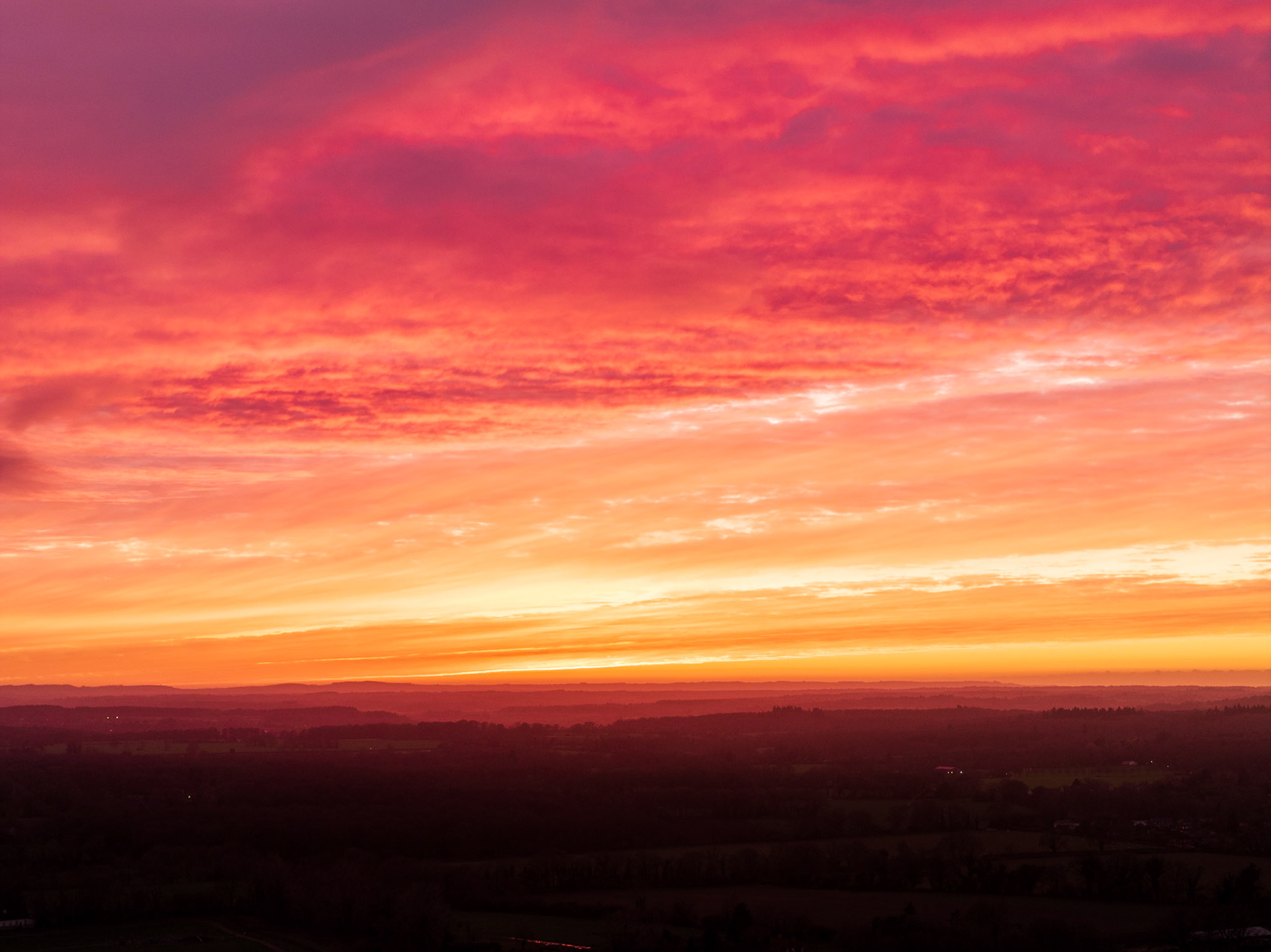
A wonderfully vivid red & orange sunset, looking over the rolling hills of Oxfordshire. Captured on the 70mm DJI Mavic 3 Pro camera.

A wonderfully vivid red & orange sunset, looking over the rolling hills of Oxfordshire. Captured on the 70mm DJI Mavic 3 Pro camera. As you can see, the colours, quality & dynamic range are excellent.
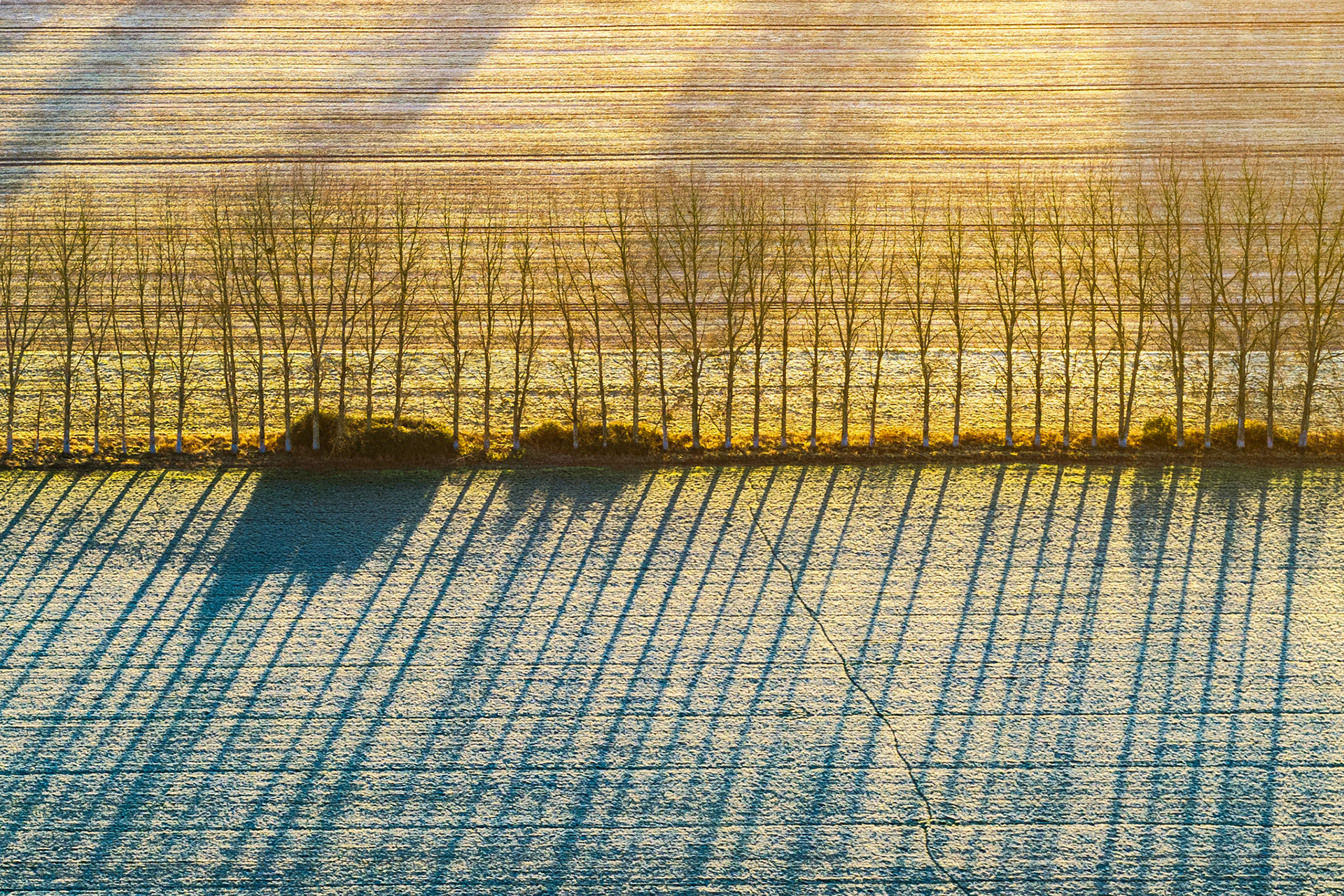
Captured with the DJI Mavic 3 Pro 166mm camera, this image again shows good quality, and solid colours & dynamic range. It's resolution is slightly lower, offering less crop potential.
Captured with the DJI Mavic 3 Pro 166mm camera, this image again shows good quality, and solid colours & dynamic range. It's resolution is slightly lower, offering less crop potential.

3. The Tele Camera (166mm)
This is the long-range "scope" lens, significantly improved over the original Mavic 3 with a wider aperture.
- Sensor: 1/2-inch CMOS
- Resolution: 12 MP
- Focal Length: 166mm (equivalent)
- Aperture: f/3.4 (Fixed)
The Flight Experience: The RC Pro Controller
I opted for the bundle with the DJI RC Pro, and I can never go back to using my phone. Not only is it very helpful having my phone available for behind the scenes content creation, it makes the experience of using the drone so much more seamless.
- Convenience: No more fumbling with cables or removing my phone case to fit it into the clamp. I turn it on, and I'm ready to fly.
- Screen Quality: The display is incredibly sharp and bright enough to see clearly even on sunny days.
- Connectivity: This is a huge step up from the base RC. The connection is rock-solid with zero dropouts, giving me much more confidence when the drone is further away.
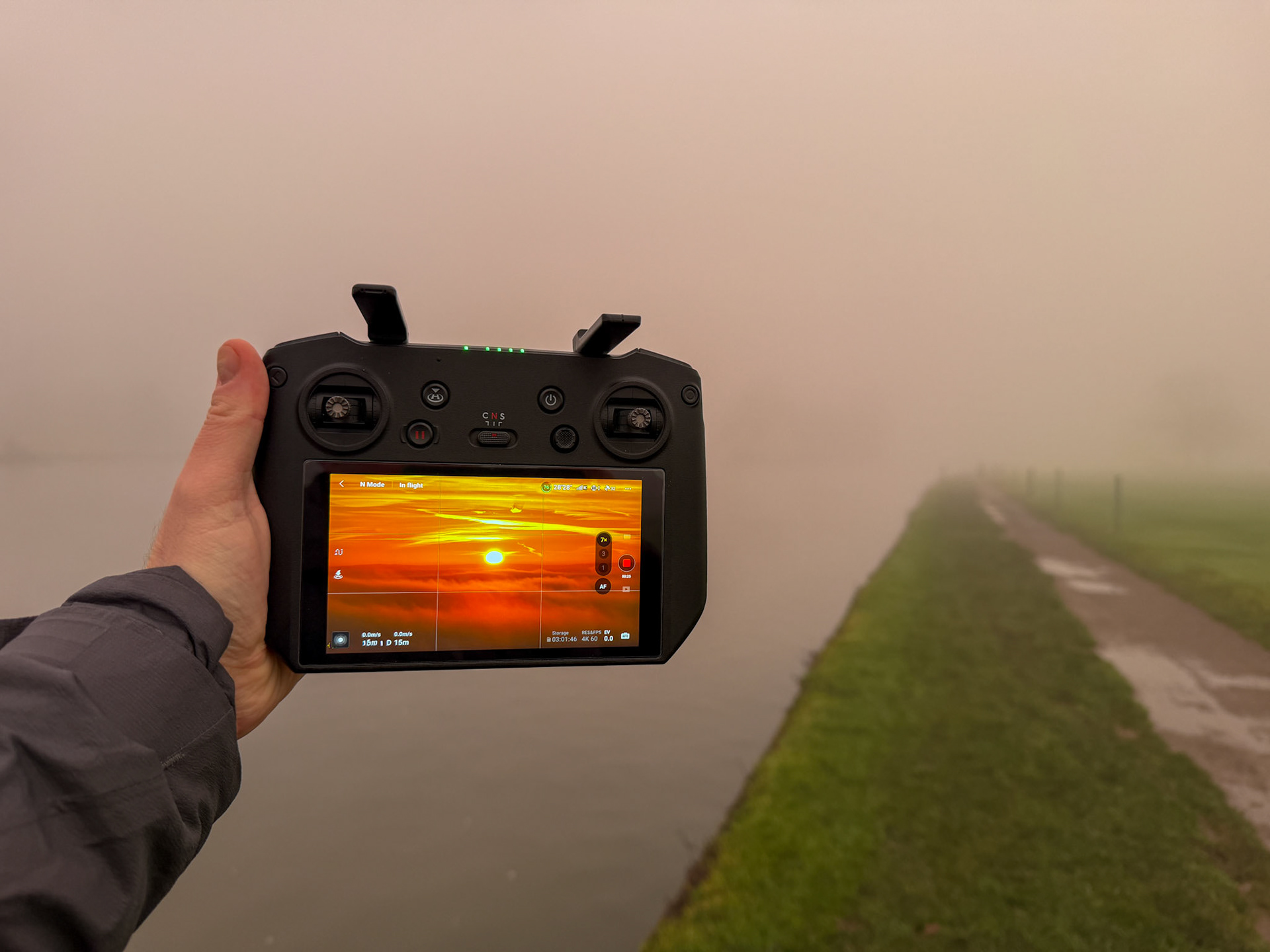
The DJI RC Pro Controller in my hand, showing a magical sunrise in the mist.

The DJI RC Pro controller is a workhorse. It's solid, robust and very capable. It's a huge step up from the original RC that uses your phone as the display.
Safety First: Omnidirectional Obstacle Avoidance
The Air 2S had decent sensors, but the Mavic 3 Pro is in a different league. The 360-degree obstacle avoidance is fantastic.My favorite safety feature is the new Vision Assist. You can actually see the view from the obstacle sensors on the controller screen—meaning you can see sideways or backward independently from where the main camera is pointing. It adds a layer of spatial awareness that makes navigating tight spots much less stressful.
Performance: Stability, Battery, and Sound
When you get this bird in the air, you feel the difference in physics.
Stability: Because it is larger and heavier, it handles wind much better. It feels sturdy and planted in the air. It's also faster, more responsive and the gimbal is quicker at moving/panning.
Battery Life: The flight time is significantly longer. I spend less time worrying about the "Return to Home" beeping and more time waiting for the perfect light.
Noise Profile: This was a pleasant surprise. While it’s a bigger drone, it seems quieter than the Air 2S. The propellers produce a lower-pitched hum rather than a high-pitched whine. This is huge for me, as I always try my best to be discreet and not disturb anyone while I’m shooting.
Smart Buying: Why I Skipped the Mavic 4 Pro
Honesty time: I didn’t pick this Mavic 3 Pro up brand new. While the buzz around the new Mavic 4 Pro is real, the price tag is equally intense. I couldn't justify the cost of the absolute latest model, so I decided to look for value in the second-hand market. I tend to always go second hand - photographers are often careful & considerate with their gear, so second hand cameras and lenses are often is "as new condition". 
I found a listing for a Mavic 3 Pro kit that was essentially "as new" with barely any flight hours on the log. Best of all? It came with a staggering five batteries. By waiting and buying used, I secured a massive haul of pristine gear for a fraction of the cost. It’s a great reminder that you don't always need the bleeding-edge release to get a professional-grade upgrade; sometimes the previous generation offers the best bang for your buck.
The Verdict: was the upgrade worth it?
If you are just taking casual snaps, the Air 2S is still a fantastic machine. But if you want to push your aerial photography to a higher standard with more opportunity, the DJI Mavic 3 Pro is a worthy investment. The combination of the triple-camera system, the incredible dynamic range, and the robust flight experience makes it a joy to use.
I'm personally thrilled to have made the jump and cannot wait to see what I can capture in the coming months and years with this piece of kit! 

You may also like

Back to Top