There is nothing quite like a British bluebell wood in full bloom. A violet-blue carpet stretching between ancient trees, dappled light filtering through fresh green canopy, the faint sweet scent hanging in the still morning air. It is one of nature's most extraordinary seasonal spectacles, and one that the UK has a special responsibility to protect. Around half of the world's bluebells grow here, making late April and early May a uniquely British (and Northern European) photography event.
But here's the thing: I'm not going to give you a list of locations.
Not because I'm being secretive for the sake of it, but because I genuinely believe that part of the magic of bluebell photography is the chase. Finding your own secret woodland, returning to it year after year, watching it change with the light and the seasons. That is something no coordinates on a map can give you. And practically speaking, sharing specific spots for smaller, lesser-known woods does real damage. Bluebells are fragile. One viral Instagram post can bring lots of visitors to a small wood that simply cannot absorb that footfall.
So instead, let me share everything else I know - timing, scouting, light, technique, and the philosophy that underpins it all.
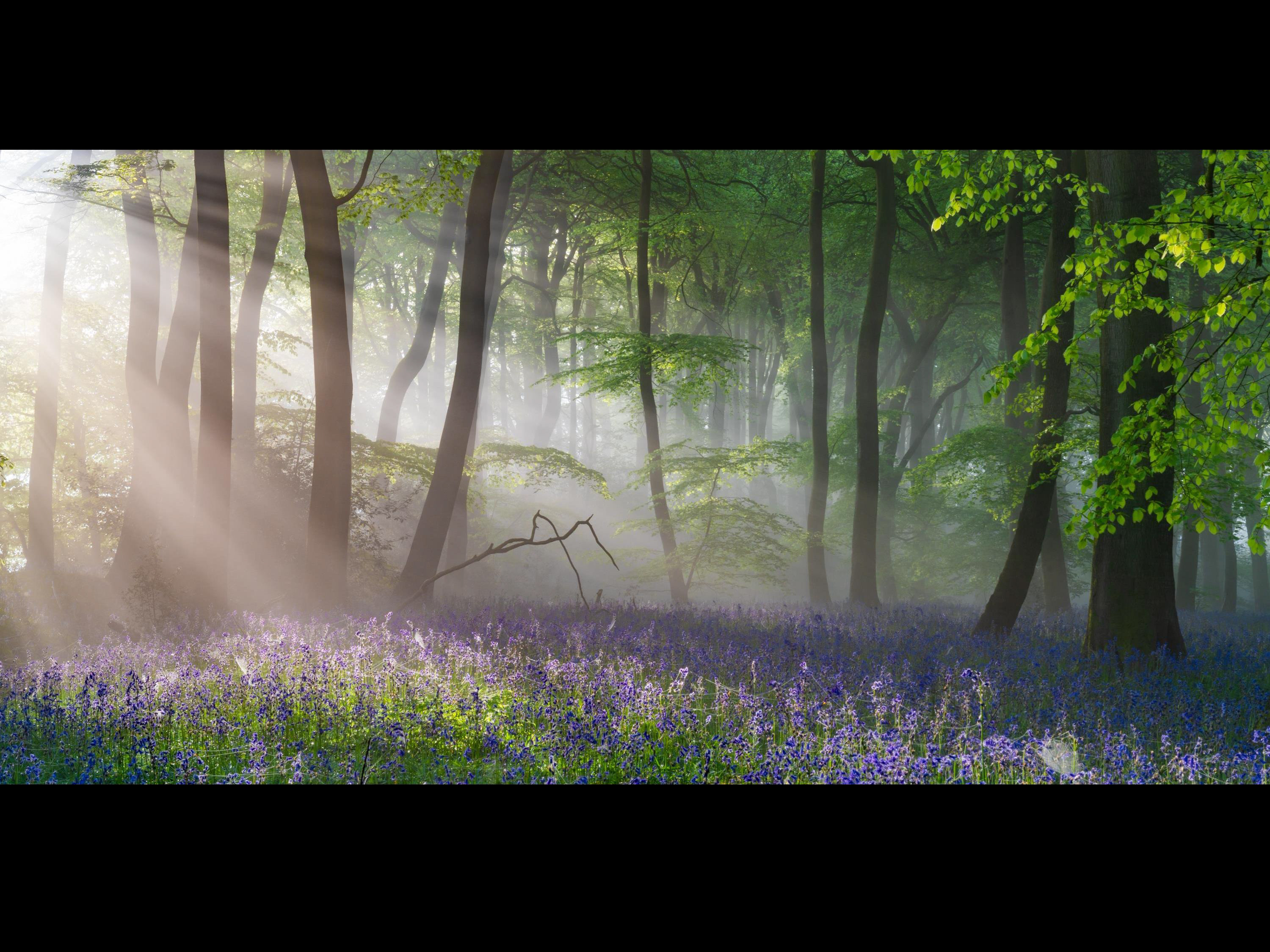
Bluebells and beech trees are prevalent in this photograph from a woodland in the South of England. A lone branch appears to float above the bluebells, being a key central compositional feature. Backlighting from sunrise lights up the mist beautifully.
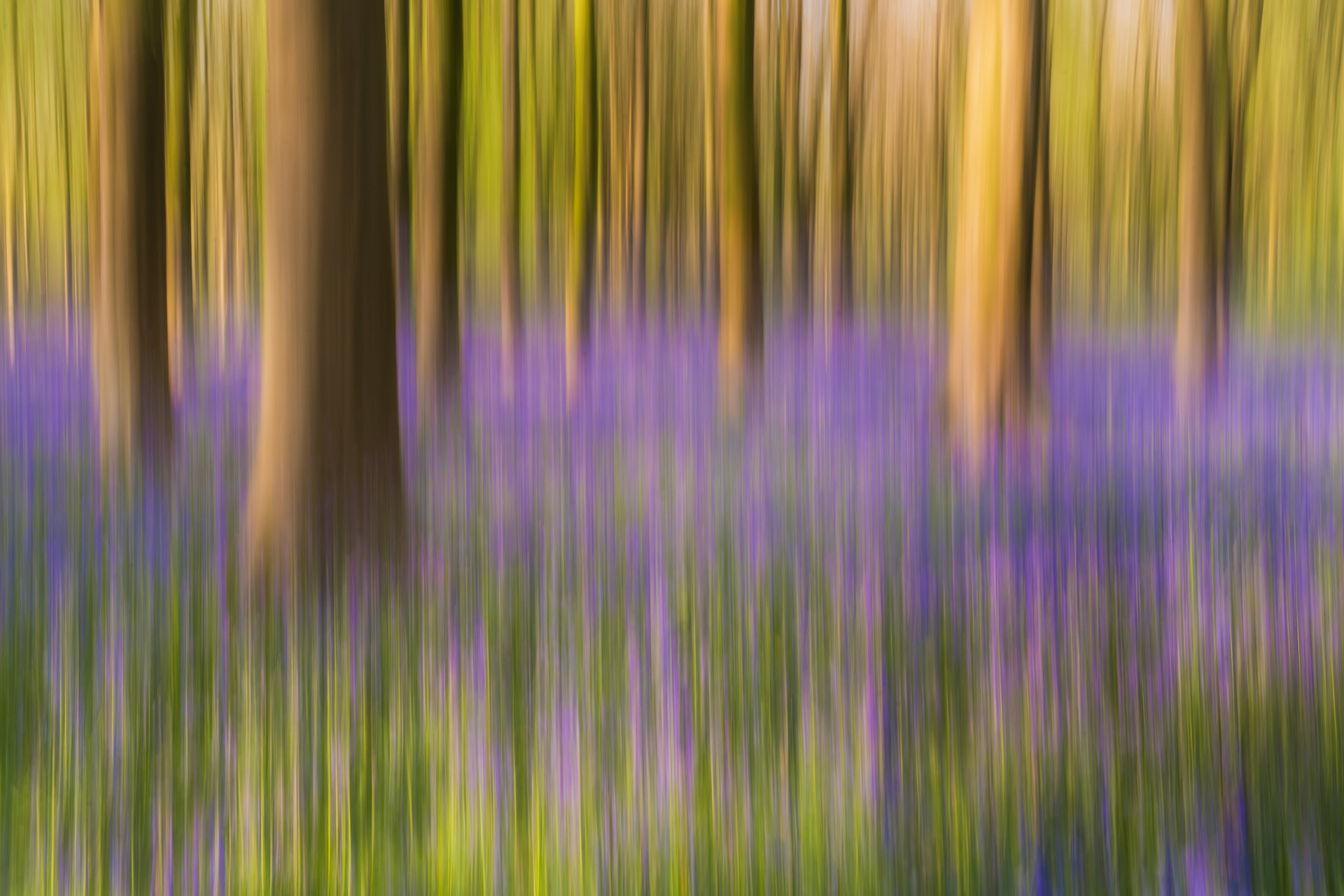
Bluebells and beech trees are prevalent in this photograph from a woodland in the South of England. A lone branch appears to float above the bluebells, being a key central compositional feature. Backlighting from sunrise lights up the mist beautifully.

Timing Is Everything
Bluebells in the UK typically peak somewhere between mid-April and mid-May, but this varies considerably from year to year and from south to north. A warm March can push the season earlier; a cold snap can delay it. The further north you go, the later the peak.
One rule I always follow: don't leave it too late. A full bluebell carpet can go over within days if the weather turns warm. If conditions look good, go. You can always come back, but you can't un-miss a peak.
Bluebells and beech trees dissolve into colours and shapes in this ICM (Intentional Camera Movement) photograph. When Mist or Fog is not present, you can start to experiment with compositions like this, getting more creative and testing out new techniques.
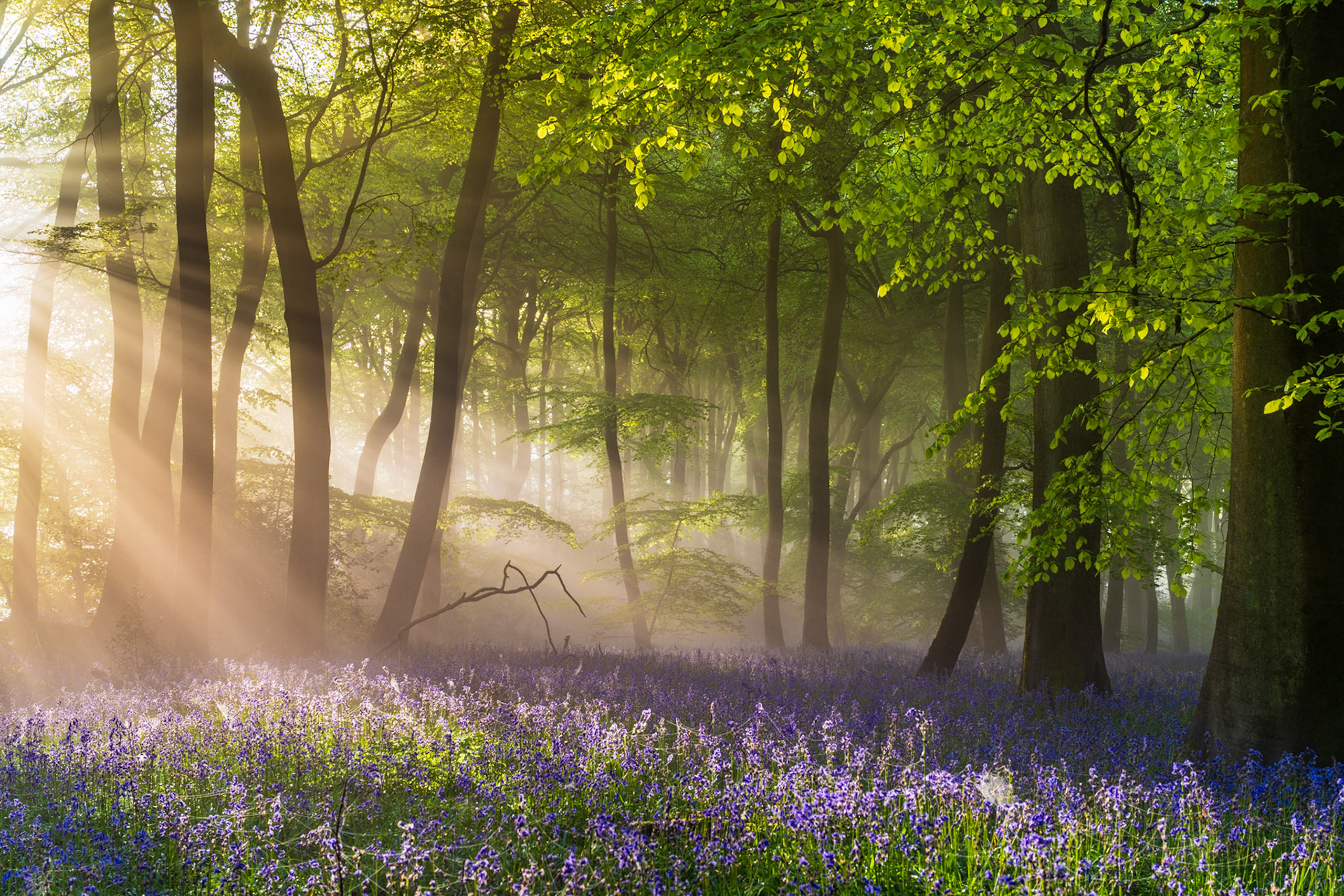
Bluebells and beech trees dissolve into colours and shapes in this ICM (Intentional Camera Movement) photograph. When Mist or Fog is not present, you can start to experiment with compositions like this, getting more creative and testing out new techniques.

Finding Your Own Bluebell Spots: The Art of the Scout
This is where patience pays off. If you want to find those smaller, less-visited woodlands, the ones where you might be entirely alone at sunrise, you have to put in the work before the season arrives.
My approach combines a few methods. I look beyond the obvious and seek out smaller bloggers, local photography groups, and even Google Maps photo contributions. People share images without always naming locations explicitly, and a careful eye can help you identify promising areas to investigate. It's slow, sometimes frustrating research, but enormously rewarding when it pays off.
Then there's the March visit. This is perhaps my most important piece of advice: visit your shortlisted woodlands in March, before the bluebells arrive. The green shoots will already be pushing through the ground, giving you a clear read on coverage and density. More importantly, you can scout compositions. Where will you place your tripod? How does the light fall through the trees? Are there distracting elements, fallen branches, or messy undergrowth that will clutter your frame? A clean, open woodland floor with beautiful tree structure is worth ten cluttered alternatives.
I like to keep notes, too. I save locations in Google Maps with written notes attached, such as light direction, best time of day, whether it needs mist to sing, what focal lengths worked. These logs become invaluable year after year. Trust me: it is very easy to forget these simple things after a couple of years!
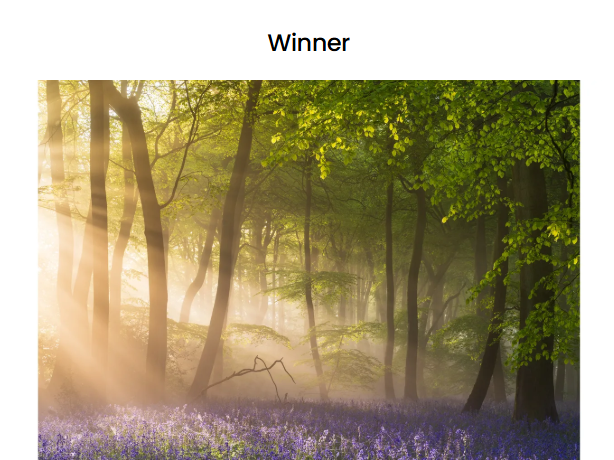
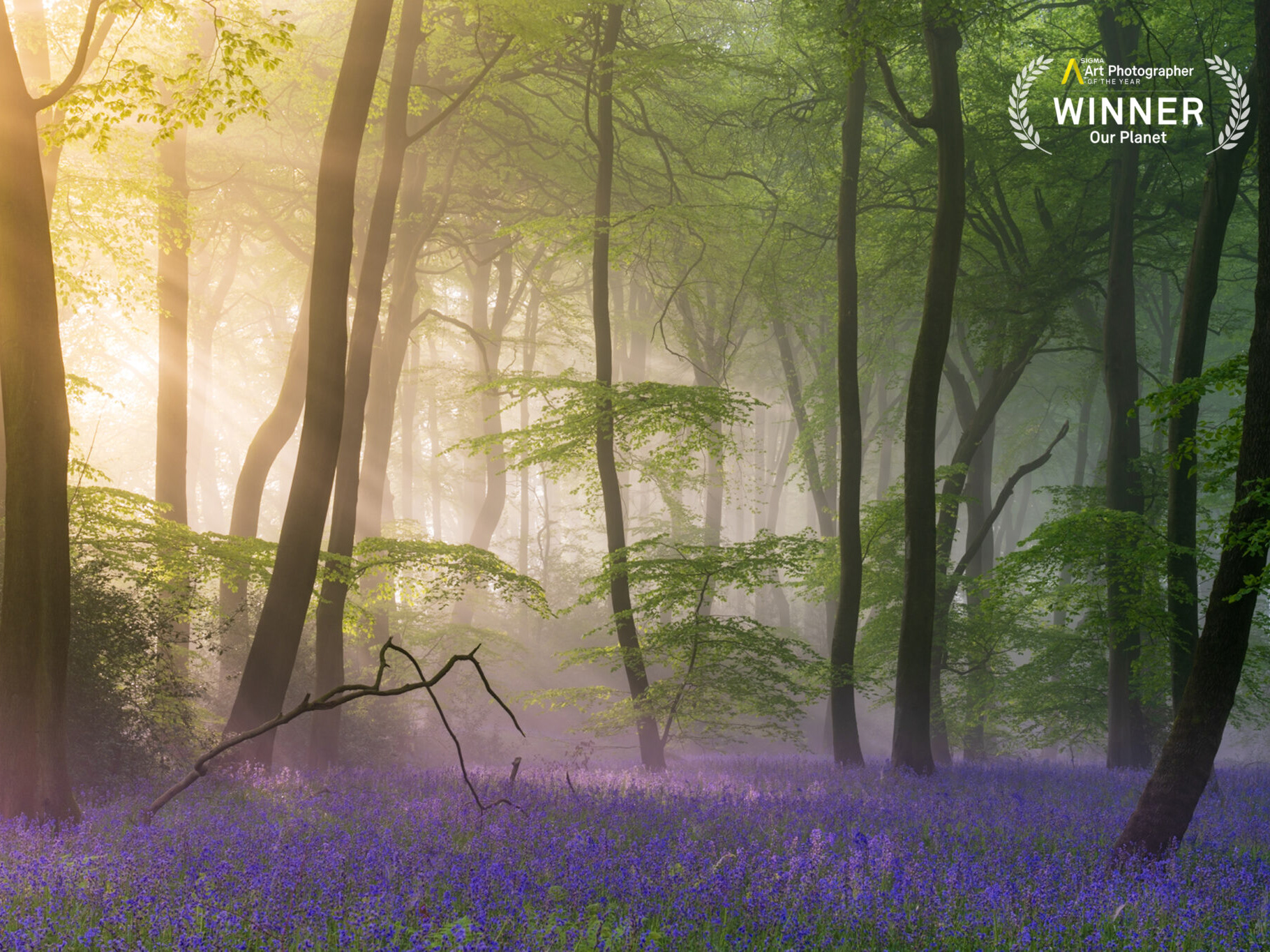
This photograph is award winning, having won the British Photography Awards Landscape category in 2024. Sunbeams pierce the side canopy of this beech wood, lighting up the bluebells and vivid green leaves in beautiful light. A truly magical moment that I was thrilled to capture. Patience, persistence and resiliance enabled me to capture this, thanks to revisiting the location and scouting compositions in advance.
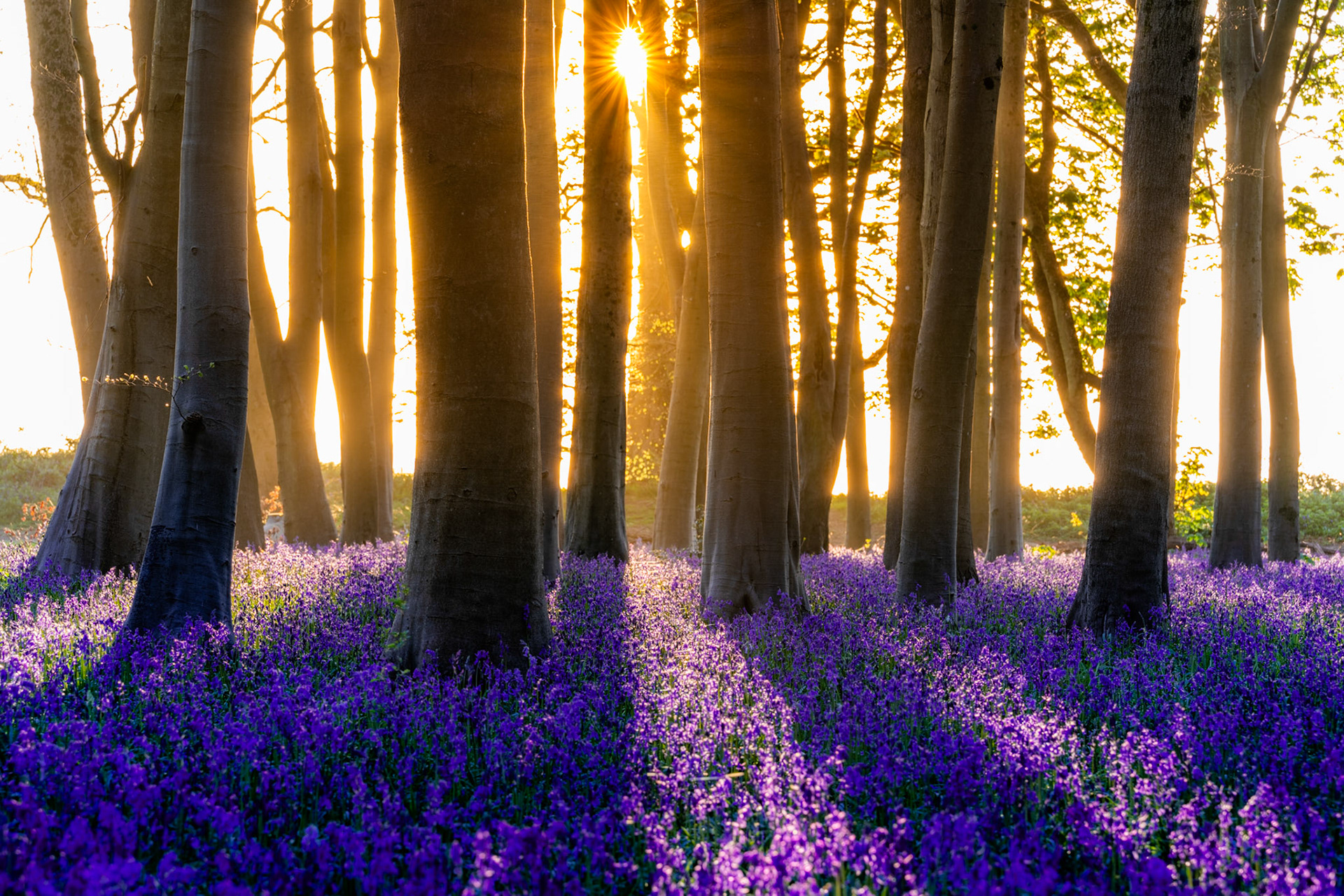
This photograph is award winning, having won the British Photography Awards Landscape category in 2024. Sunbeams pierce the side canopy of this beech wood, lighting up the bluebells and vivid green leaves in beautiful light. A truly magical moment that I was thrilled to capture. Patience, persistence and resiliance enabled me to capture this, thanks to revisiting the location and scouting compositions in advance.

The Light That Makes the Difference
It may sound cliche, but good bluebell images are made and broken by light. The colours are inherently cool and delicate, harsh midday sun bleaches them out and creates ugly contrast. Overcast light can be beautiful, giving an even, glowing quality to the violet carpet. But the conditions I dream about are something rarer.
The holy grail is mist combined with directional light, fog clearing just enough to let shafts of sunlight pierce through the canopy, creating those iconic woodland beams. It is extraordinarily rare, and when it happens, it's almost overwhelming.
My most memorable morning in the field was exactly that. A thick foggy dawn, almost no visibility. But in one corner of a woodland I'd scouted carefully in the weeks before, the fog began to lift and light started to pour in. Beams cutting through the trees, illuminating the bluebells below. I stood and watched it for a moment before I even raised the camera. That image called 'Bluebells at Sunrise' has went on to win the British Photography Awards Landscape Category in 2024, and it remains the single most significant moment of my photographic journey. It is the morning that set everything in motion. It also won the Sigma Art Photographer of the Year 'Our Planet' Category.
You cannot manufacture mornings like that. But you can position yourself to be ready for them, by knowing your woodland intimately, arriving before sunrise, and watching the forecast obsessively. I am not scared to say that these photographs are not lucky, they are born out of the chase, and the relentless revisiting, planning and with a bit of luck from the weather gods.
Sunrise is almost always the answer. The light is lower, softer, and more directional. The air is still. If mist is going to form, it'll be there. Sunset can also reward, particularly for sunstar effects shooting into the light, but there is something about the freshness of a bluebell wood at dawn that is difficult to replicate later in the day.
Camera Settings and Technique
Bluebells demand precision. The depth of field decisions you make will define the image.
For wide woodland carpet shots, I typically want as much in focus as possible. I'll generally shoot at f/8 or f/11 on a tripod and take my time. My workhorse for this kind of image is the Sony a7RIV paired with the Sigma 24-70mm f/2.8 Art. This combination handles the dynamic range of a backlit woodland scene beautifully. When compositions and conditions allow, the Sigma 70-200mm f/2.8 Sports earns its place too. The compression it brings can create something quite different, pulling a distant carpet of blue towards you and simplifying the background.
A tripod is non-negotiable. Low angles, sometimes level with the flowers, can be transformative, turning a field of bluebells into a sea that stretches to the horizon of the frame. It also allows much more flexbility on the exposure, allowing longer shutter speeds to keep the aperture and ISO to be where you want them to be.
A few technique tips I always return to:
- Shoot into the light (or with side light) where possible: backlit bluebells glow in a way that front-lit flowers simply don't.
- Find a clean composition: be picky! Find that clean carpet, try and ensure there is no distracting elements such as fallen branches, bushes or scrub. Unless, of course, they can be incorporated into the composition.
- Wait: the best light often lasts only minutes. Know your woodlands and be ready when the weather conditions are aligning. 
- Keep going back: the best shots don't happen by chance. Failing and revisiting, and having that resiliance is what will bring the goldilocks conditions. Plus, there is always next year...
One of the most pristine bluebell woodlands I've visited, where the woodland floor is flawlessly covered in the bluebell flowers. By using my long Sigma 70-200mm lens, I managed to capture the carpet perfectly, compressing it into this scene, where the sun shines from behind lighting up the flowers and creating shadows. An immersive bluebells photograph.
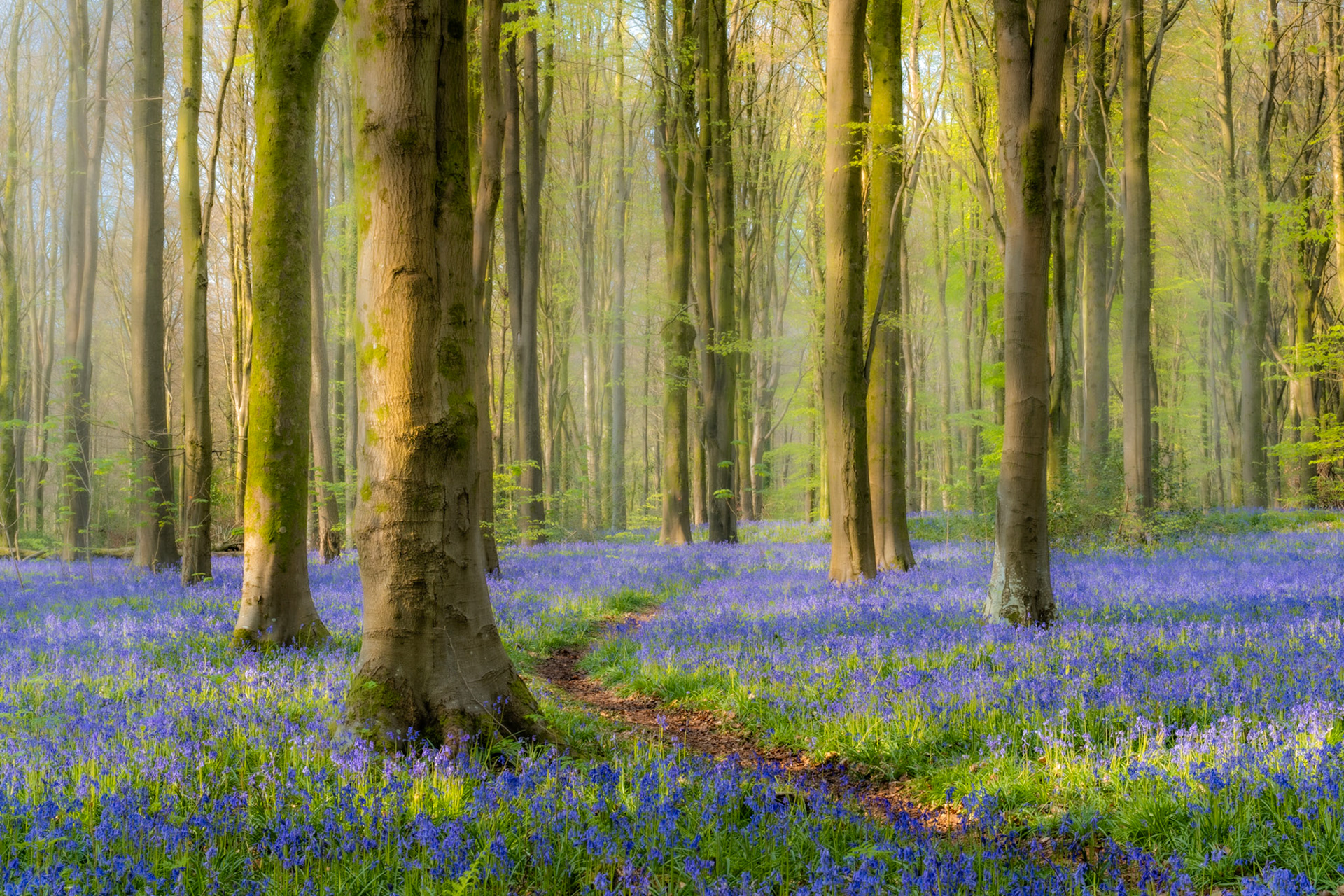
One of the most pristine bluebell woodlands I've visited, where the woodland floor is flawlessly covered in the bluebell flowers. By using my long Sigma 70-200mm lens, I managed to capture the carpet perfectly, compressing it into this scene, where the sun shines from behind lighting up the flowers and creating shadows. An immersive bluebells photograph.

Nature First
I hold the Nature First principles close when I'm photographing in bluebell woodlands, and I'd encourage every photographer to do the same.
It goes without saying, but bluebells are easily damaged. A single footstep crushes flowers that have taken years to establish. So I stay on paths and tracks. 
I never share precise coordinates for smaller woodlands publicly. Not even on private messages I can't control the forwarding of. I don't geotag posts. I believe the best photographs come from earned knowledge, not borrowed locations.
The joy of bluebell photography is inseparable from the chase. The hours of research, the March scouting visits, the early alarms, the foggy mornings that don't deliver. These all make the moments that do deliver feel extraordinary. Protect the places that give you those moments.
This photograph was captured on a challenging morning in a large beechwood in the South of England, where low cloud was present as opposed to the forecasted mist. I used this path to create a leading line into the beech trees, and let the side light add interest through the bluebells.
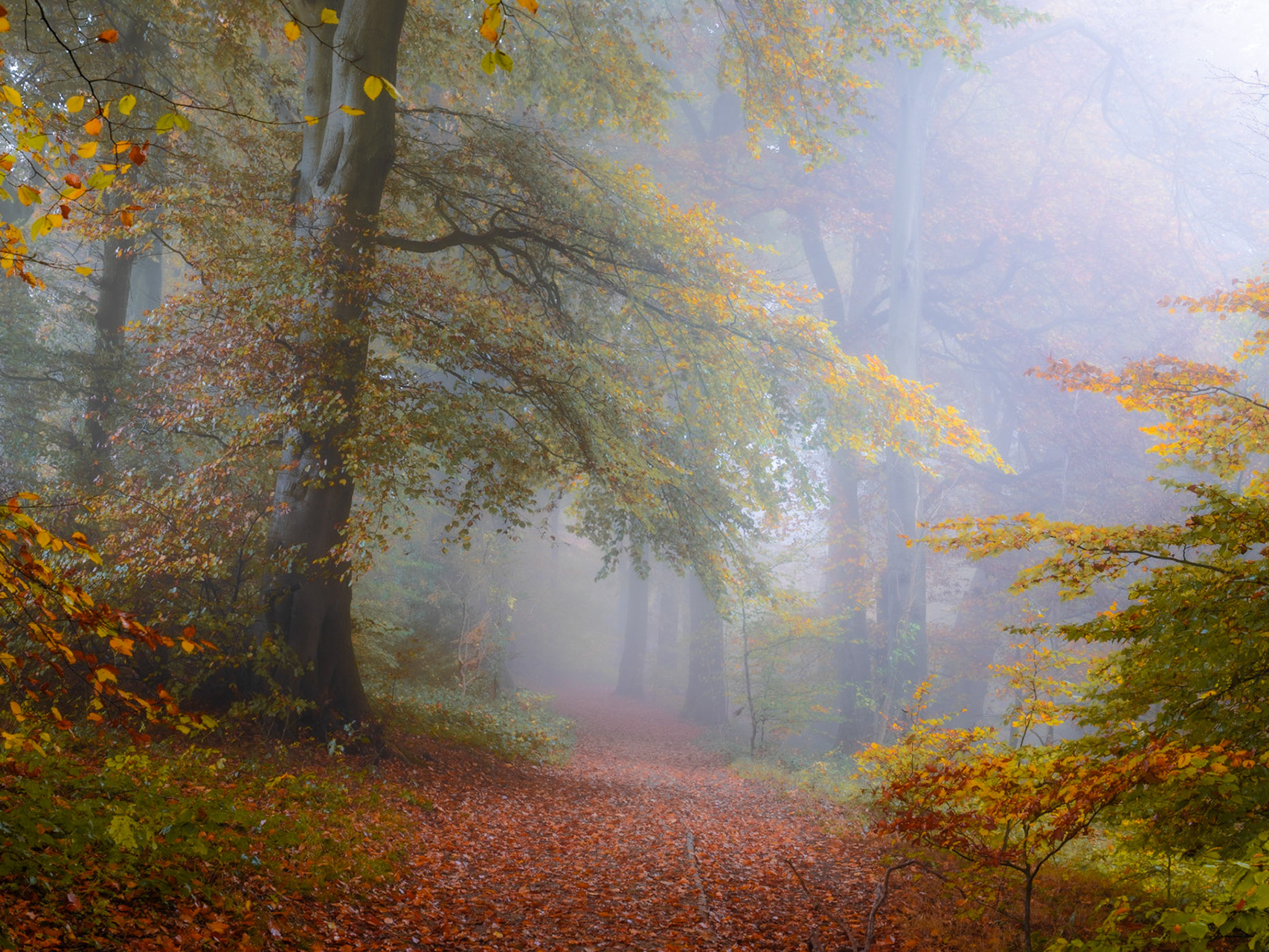
This photograph was captured on a challenging morning in a large beechwood in the South of England, where low cloud was present as opposed to the forecasted mist. I used this path to create a leading line into the beech trees, and let the side light add interest through the bluebells.
Final Thoughts
Bluebell season is brief, unpredictable, and absolutely worth chasing. There is no shortcut to the best images: only preparation, patience, and a willingness to be out before sunrise in a cold, misty British woodland, hoping that the light does something magical. 
Find your own secret wood. Scout it in March. Watch the forecast. Set your alarm early.
And when the fog clears and the beams break through... be ready.

You may also like

Back to Top