Savernake Forest in Wiltshire is one of the premier locations in the UK for autumn woodland photography. Home to many iconic ancient oaks and an array of old beech trees, the forest transforms into a spectacular display of gold, copper, and amber during late October and early November. In this post, I’ll share the story behind my trip to this magical woodland and offer a few practical tips for capturing the chaos of ancient forests.
There is something inherently magical about ancient British woodlands, and Savernake Forest is truly in a league of its own. On my recent autumn trip, I set out with a specific goal: to capture the character of its veteran trees amidst the changing seasons.
As a landscape photographer, you often find yourself at the mercy of the weather, but on this particular morning, I was blessed with fantastic conditions. The light filtered beautifully through the canopy, and the autumn colours were the most incredible I have seen in years. Funnily enough, I only stopped as I was en-route to Dartmoor, and the forecast wasn't particularly encouraging - no signs of mist or fog, just low cloud. What you will see and read below will show you why the weather forecast shouldn't always be the guiding force behind whent to go!
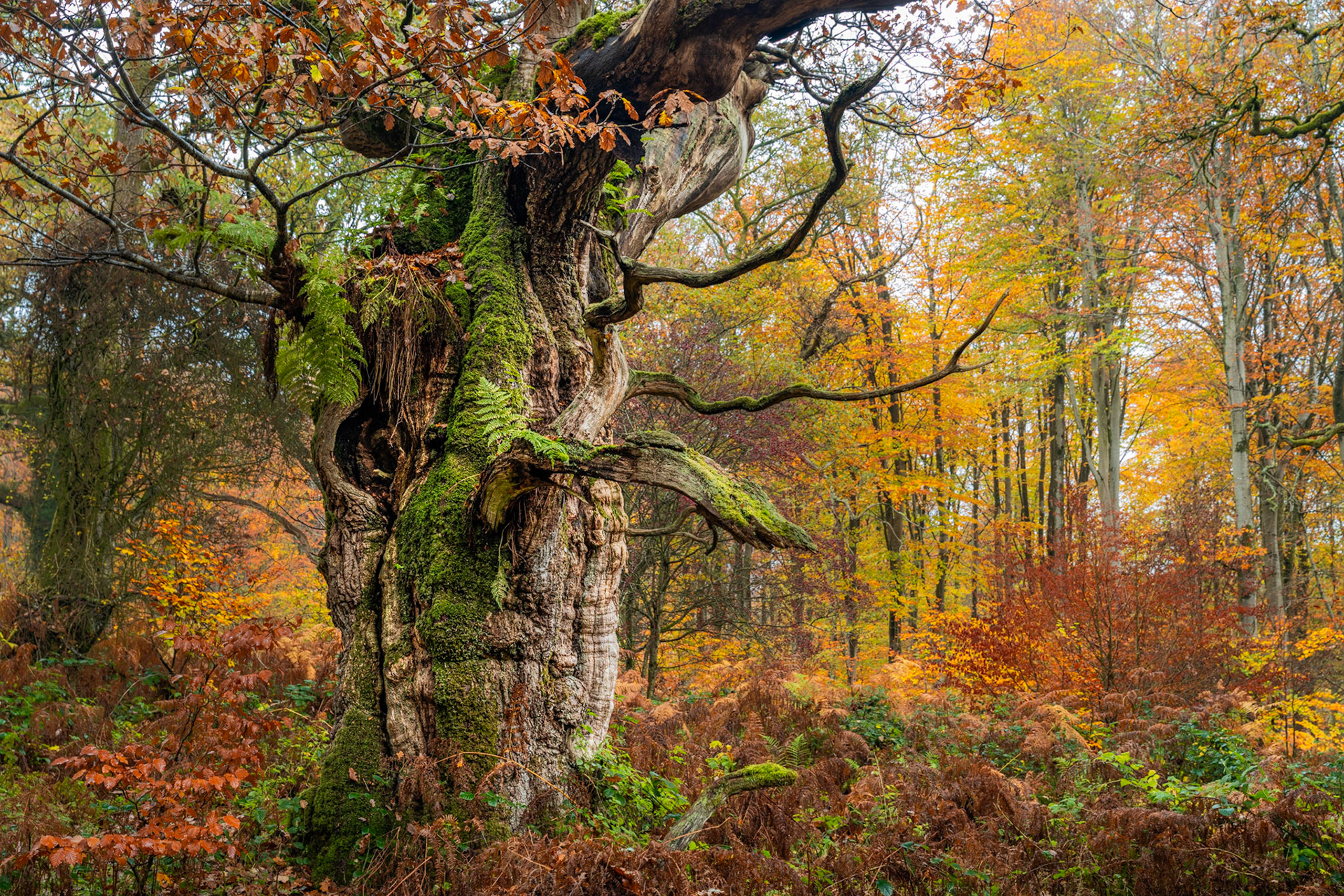
An ancient oak tree stands proudly surrounded by autumn colour in Savernake Forest, Wiltshire, England. Gnarly, characterful and with a face to match.
Finding Order in a Magical Woodland
Photographing ancient trees presents a unique set of challenges. Unlike a grand, sweeping mountain vista, a forest is incredibly chaotic. There are distracting branches, uneven undergrowth, and a distinct lack of obvious focal points.
When I arrived at Savernake, the sheer scale of the veteran oaks was overwhelming, plus there are so many of them, you just want to keep moving to see them all. To translate that feeling into a two-dimensional photograph, I had to be highly selective, and patient. Whilst it's tempting to keep moving, it's worth just pausing to watch how the light is moving, and how you could alter your composition.
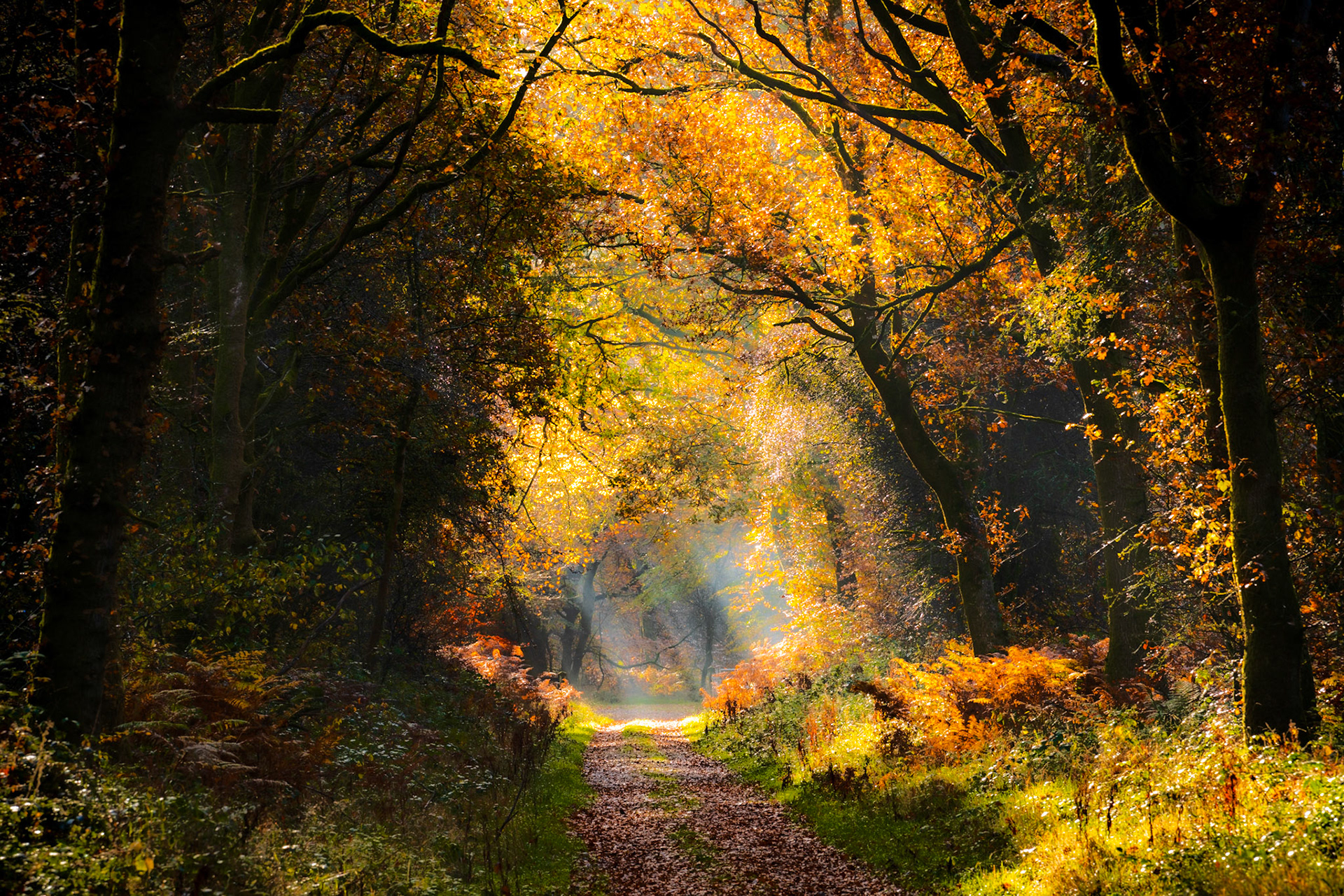
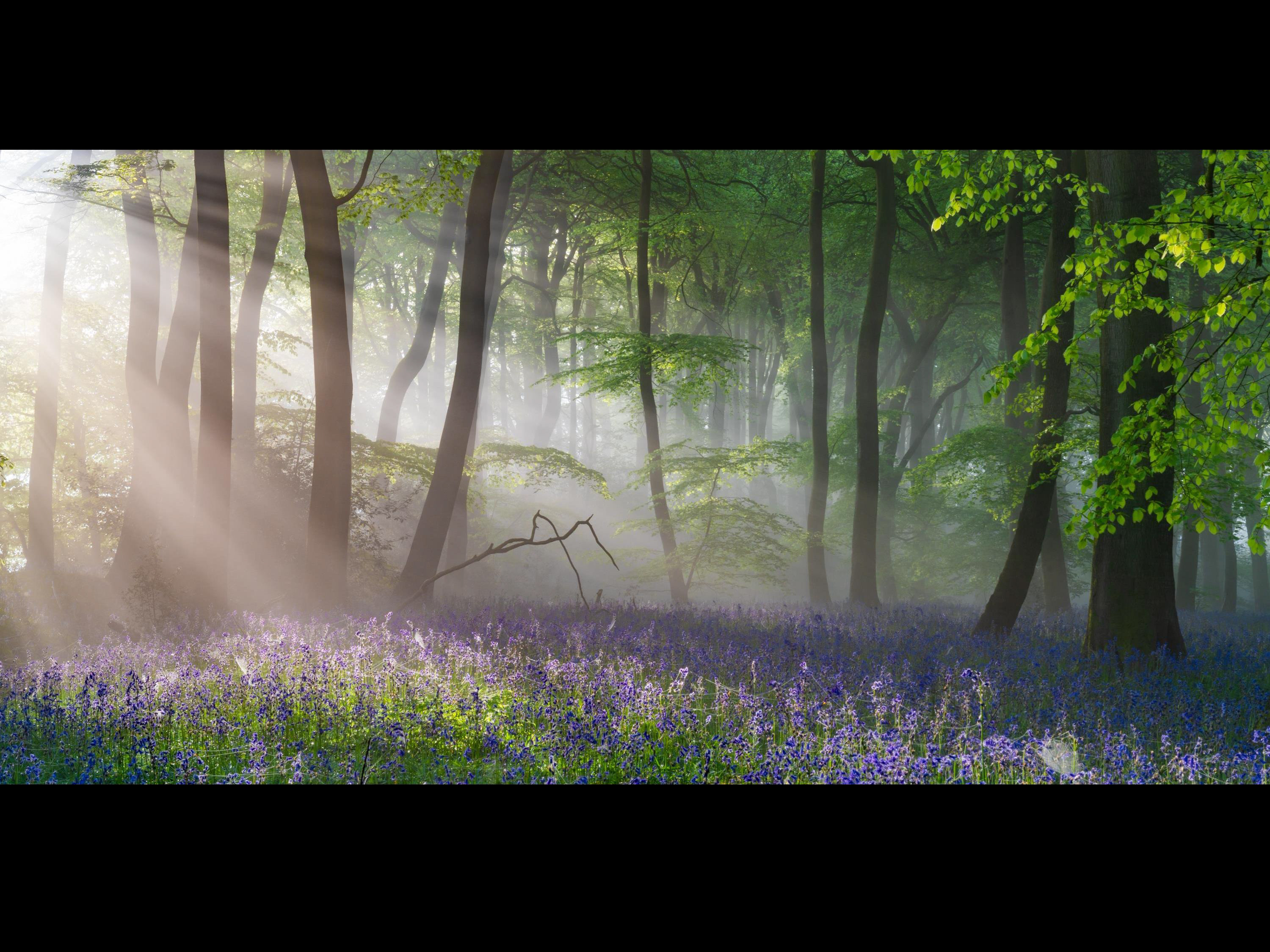
Why patience matters - light moves, shifts and changes the outcome of a photograph. Here, with my Sigma 70-200mm f2.8 Sports lens, I zoomed into the sunbeams at the end of this path. These beams were coming and going, so waiting for them to be at their best was essential.
3 Tips for Photographing Ancient Trees in Autumn
If you are planning your own woodland photography trip in the UK, here are three techniques I used to capture the essence of Savernake Forest:
1. Finding order in the chaos of a woodland.
Woodlands are naturally chaotic, with branches, colours and foliage which can easily distract. Mist or fog is your friend here: it softens the busy backgrounds and it is always what I'm hunting for. However, during my visit to Savernake Forest, there wasn't any. This means you have to think harder about compositions, and hunt for scenes that work. This means spending time in and around trees or subjects that you want to capture. When you have found a scene that looks like it should work, set up your camera and frame it. Raise or lower your tripod and pick out the lens you need. Play with focal lengths and settings. And then shoot. Review, and think. It's often in these scenarios where I am rewarded.
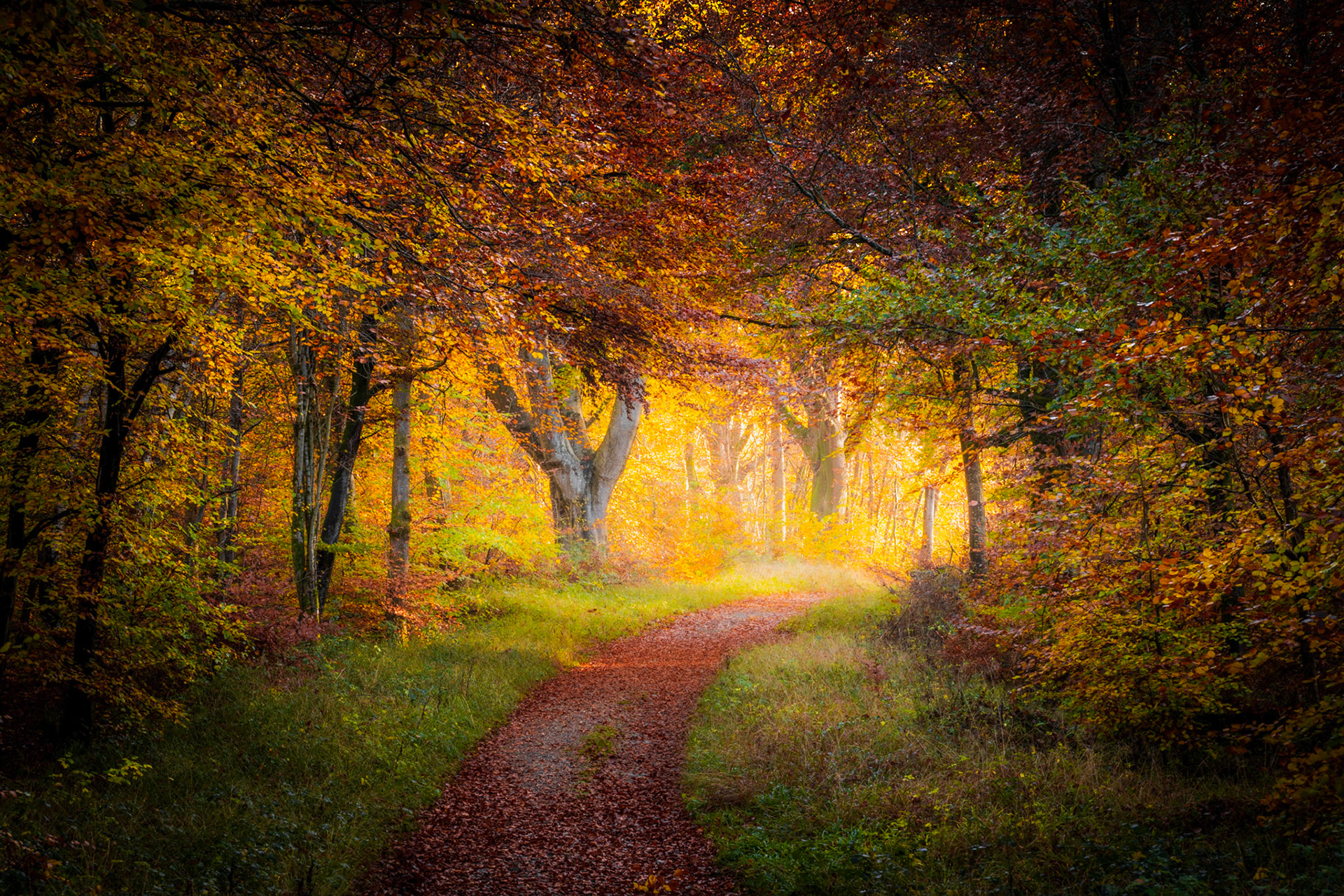
This scene to the left was as I was leaving Savernake, where I was still hunting for any opportunities. I was looking to my sides, and for this photograph I took the time to look behind. I saw this 'portal' of light, where the distant trees were lit up and the trees closer to me were in shadow. I switched to my telephoto lens (Sigma 70-200mm f2.8 Sports) and zoomed right in to capture the scene.
The things I considered for this photograph:
- Exposure: I exposed for the highlights, to ensure I kept the detail in the brighter parts of the scene.
- Framing: I used the darker trees surrounding me to frame the brigher parts of the scene with the round darker parts.
- Subject: The two trees on the path and the path itself are key here. I moved myself to a point where these flowed nicely together.
- Leading Lines: I used the path from roughly the centre of the frame to lead into and out of the frame.
- Editing: Less is more. I focussed on the colours and the brighter parts of the image, and used some slight dark vingnetting to focus the eye into the centre of the frame.
2. Be Patient & Turning Up Matters.
On this morning, I arrived before sunrise during blue hour. The light was flat and there was little sign of it getting any better. However as I walked around and explored, the sun began to break through the low cloud, lighting up the forest and creating some rather magical scenes.
As it was damp in the woodland, the sunlight actually caused some very light sunbeams, as it was evaporating the water in the woodland and creating a soft haze.
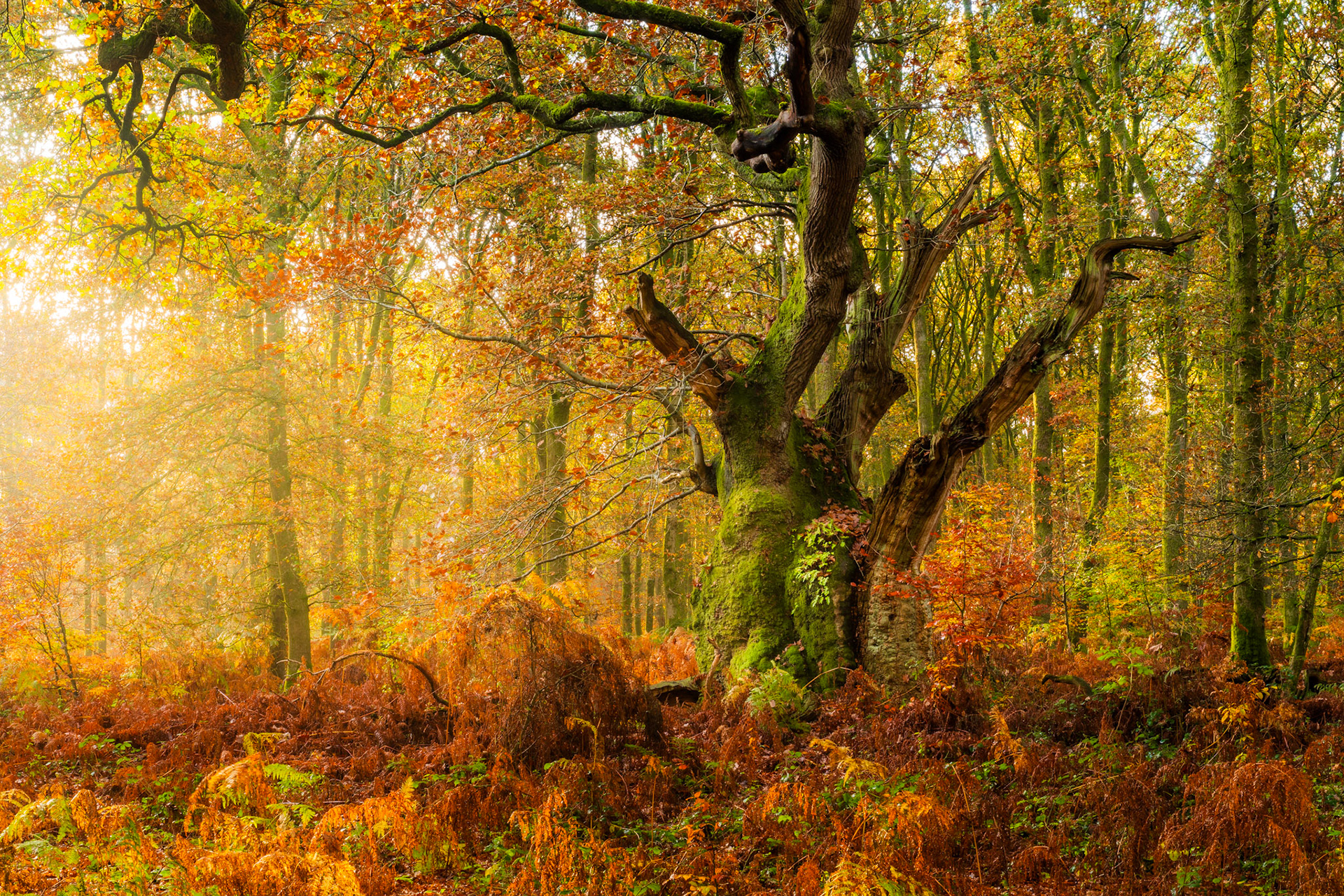
This can be seen here at this rather special ancient oak. This one is said to be around 800 years old - an incomprehensible age! If these trees could talk, it would be rather fascinating.
I love this photograph, the colours are absolutely fantastic, the autumnal golds, coppers and ambers really were this spectacular. The tree itself, with it's endless character, standing strong, backed by beech trees.
As you might expect, I was quite excited when I saw this scene unfold. The sun had just broken through and I literally ran towards it, hoping to capture it as best as I could.
Anyway - the point here is that, regardless of the conditions, patience is essential, letting the sun rise and the light develop. Turning up also matters - the forecast on this morning was non-existant for mist, fog or light. But, I got light and I also got some hazy conditions. You just never know, unless you turn up!
3. Guiding principles...
I'd like to share a bit of a cheat sheet of things I try and always consider when out shooting in woodlands.
- Use a tripod - I always tend to shoot woodlands with a tripod. Often, even with sunlight, the interiors of woodlands are dark, so having a tripod removes the worry of camera shake.
- Exclude the sky - Including any sky is more often than not a distraciton to any composition. It also blows out the highlights can cause issues with contrast in the rest of the photograph.
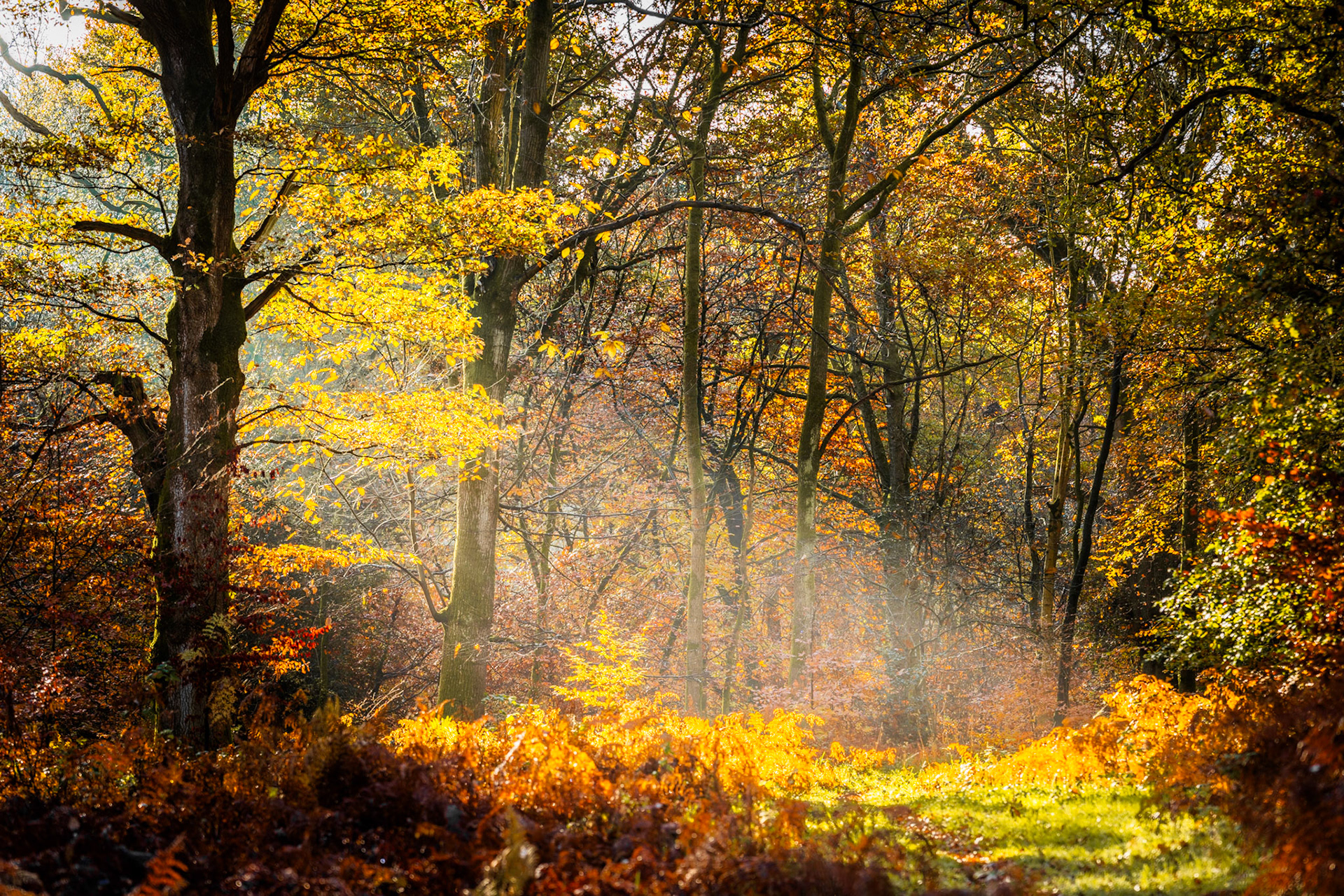
- Use a range of focal lengths - Some of my favourite woodland photographs are taken on my 70-200mm lens - including the photograph to the left here. There are two reasons why it works so well - it allows you to focus on very specific parts of the woodland & it adds a lot of compression. Both of which can be used to your advantage!
- Use a Polariser - A polariser really helps in woodland photography, by reducing the reflections from leaves & foliage. It really helps colours to pop, particularly in autumn.
- Set your White Balance to Daylight / 5500k - I stopped using Auto White Balance a long time ago. In woodlands it often resulted in problems in postprocessing, as each image would have a different colour to it. By leaving it on 5500k/Daylight, you make this non-variable, and it results in colours that resemble normal light. When shooting RAW, it can then be edited as required from a static starting point.
4. Look Closer (especially in autumn)!
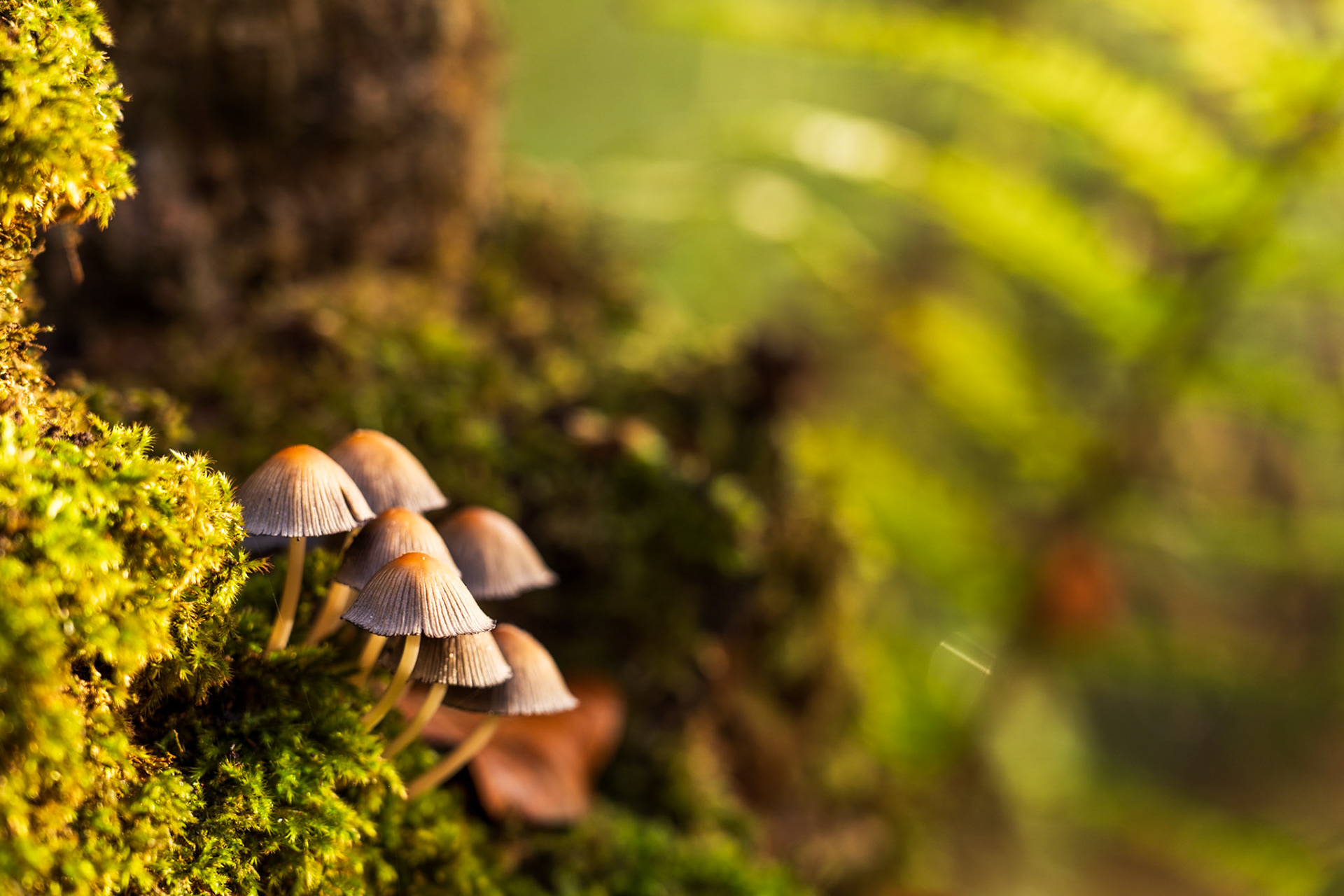
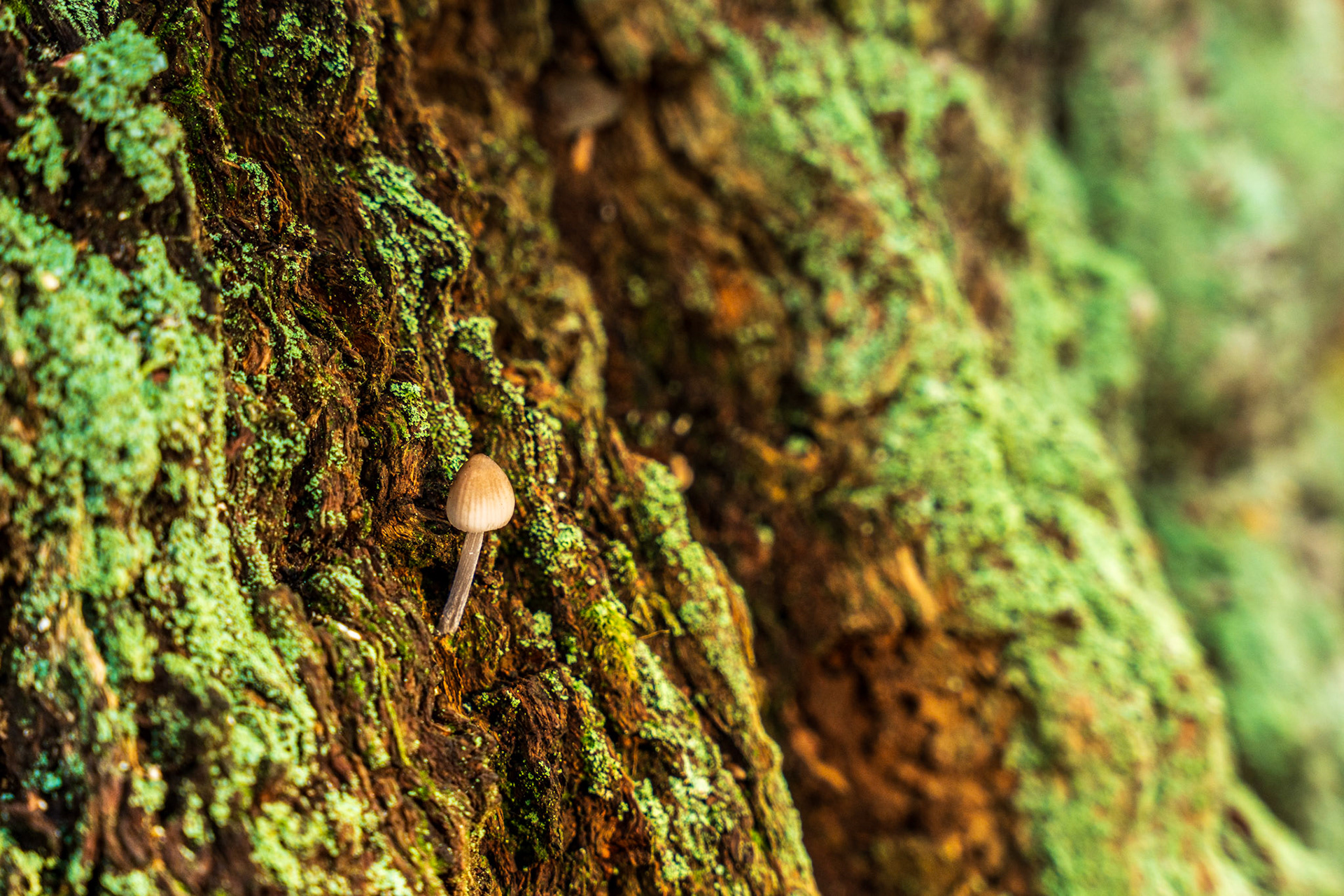
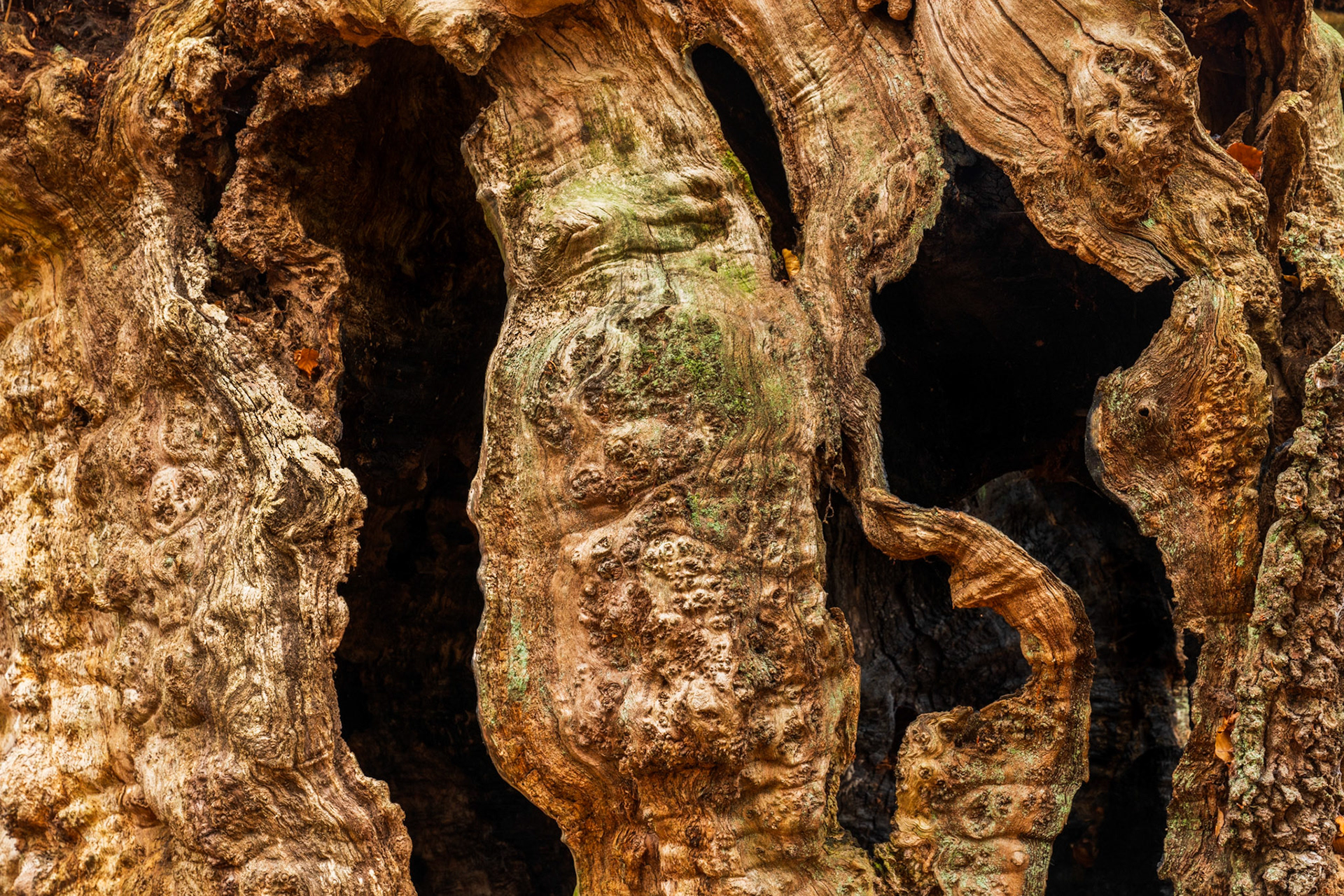
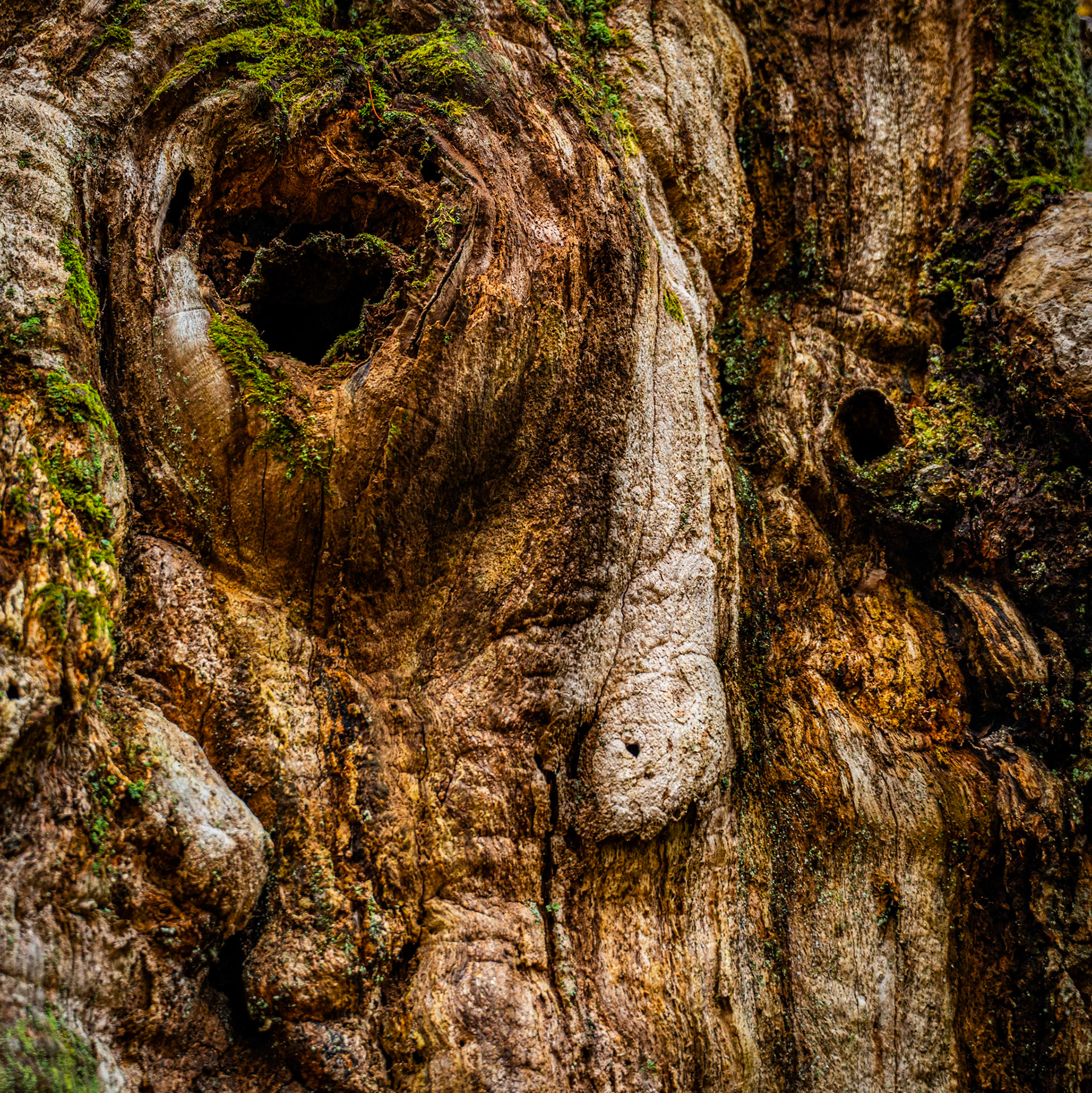
My fourth and final point on shooting woodlands in autumn (particularly ancient forests like Savernake) is to look closer, and seek out scenes which others might not see.
I've included four examples below of scenes I thought were powerful.
1) This fungi was hidden on the back of a long dead ancient oak tree, growing out of the moss and lit beautifully by the sun. The fern behind added a nice backdrop.
2) This small fungi was on a living ancient oak, which was covered in lichen. It was very small, and it looked pretty special growing out of the ancient wood from this trunk.
3) On a different dead ancient oak, the trunk is hollow. Whilst on it's own the tree is brilliant to capture, I couldn't help but notice the 'melting skull' in the patterns/holes in the trunk. I thought it was pretty damn cool!
4) On a different living ancient oak, I saw this face. Two eyes, of different sizes, a nose and patterns/textures to boot. I just love seeking out this kind of scene. Totally different to your typical woodland photography!
Overall, I had an absolutely fantastic morning shooting the beauty of Savernake Forest. The autumn colours were just incredible, and I'm so pleased I captured them at the peak of the season. Whilst it was a shame there was no fog or mist, the light and haze that arrived was a wonderful surprise and enabled me to get some real 'keepers'.
I'd highly recommend anyone in the South to make a visit to Savernake Forest, it's a truly magnificent forest with endless character.